


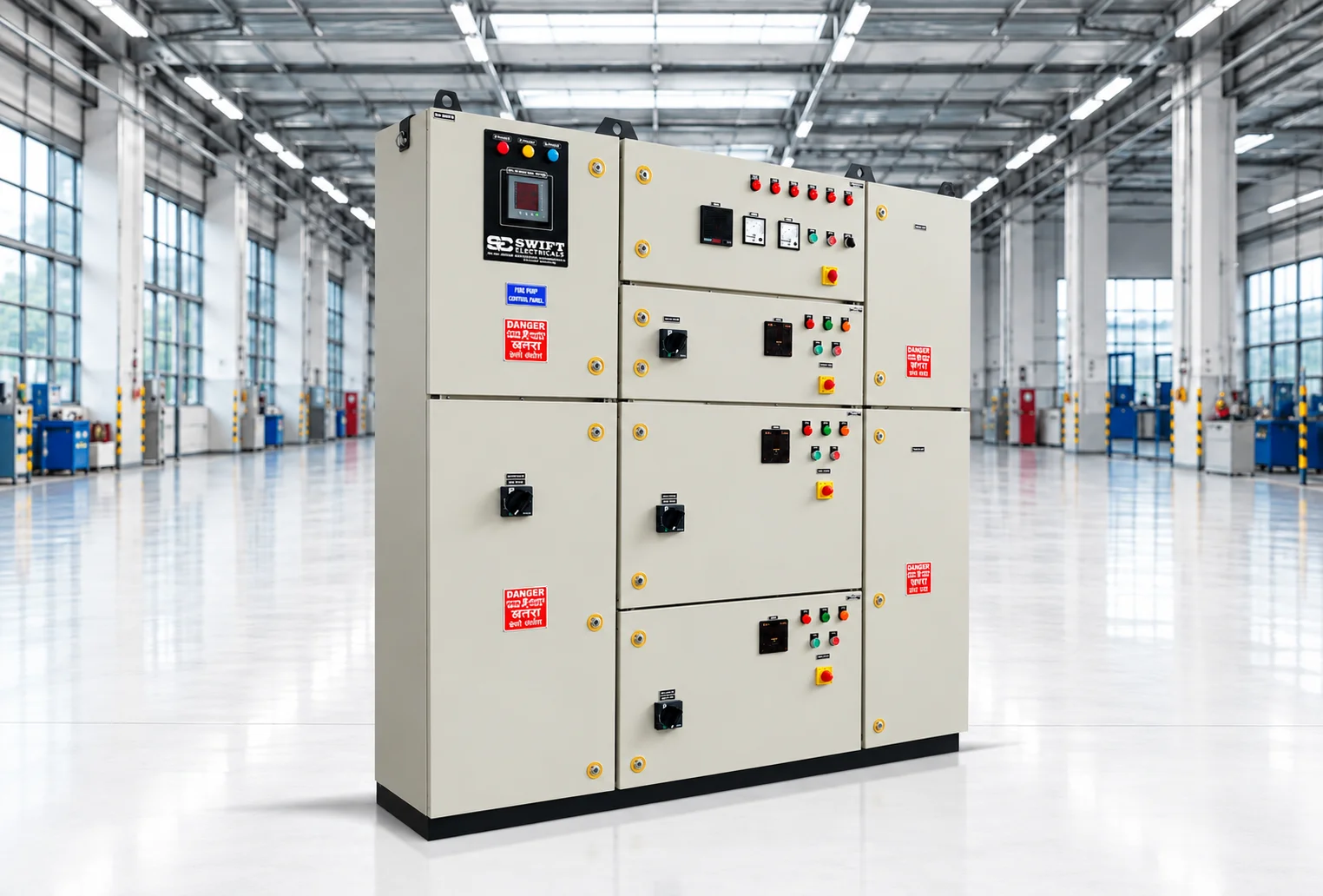
PLC panel working principle
In the realm of modern industrial operations, the efficiency, safety, and reliability of machinery and processes are paramount. At the heart of this sophisticated control lies the Programmable Logic Controller (PLC) panel. This indispensable unit acts as the brain and central nervous system for automated systems, orchestrating complex tasks with remarkable precision. Understanding the PLC panel working principle is key to appreciating the power of industrial automation and the crucial role Swiftkon Electromech Pvt. Ltd. plays in delivering robust and customized control solutions.
What is a PLC Control Panel?
A PLC control panel is a meticulously engineered enclosure that houses and organizes the critical components required for monitoring and controlling industrial machinery or processes. It serves as the central hub, integrating the Programmable Logic Controller (PLC) itself, along with its essential support systems. These typically include a reliable power supply unit, input/output (I/O) modules that interface with sensors and actuators, communication interfaces for data exchange, and vital protective devices to ensure operational safety and longevity.
Essentially, the PLC panel is the physical manifestation of an industrial automation system's control strategy. It brings together the intelligence of the PLC with the real-world signals from the plant floor, translating them into actionable commands. Swiftkon Electromech Pvt. Ltd. specializes in designing and manufacturing these advanced electrical control panels, focusing on creating solutions that are not only functional but also highly reliable, safe, and efficient, tailored to the unique demands of each application.
The PLC Panel Working Principle Explained
The fundamental operation of any PLC panel revolves around a continuous, cyclical process known as the
