


main pump and jockey pump difference
In the critical realm of fire protection systems, understanding the roles and distinctions between the main pump and the jockey pump is paramount. While both are integral to ensuring a building's safety, they serve fundamentally different purposes. The main pump is the powerhouse, designed for emergency response, whereas the jockey pump acts as the vigilant guardian of system pressure. This article delves deep into the core differences, applications, and operational nuances of these two essential components, highlighting why their proper functioning and selection are vital for comprehensive fire safety.
Understanding the Basics: Fire Pump System Components
Fire protection systems rely on a network of components working in concert to detect a fire, alert occupants, and suppress flames. At the heart of the water supply for many such systems lies the fire pump. However, this system often includes not just one, but two types of pumps: the main fire pump and the jockey pump. Each plays a unique role in maintaining system integrity and ensuring readiness during an emergency.
The primary function of any fire pump system is to deliver sufficient water at the required pressure to combat a fire. This involves maintaining a constant state of readiness and having the capacity to deliver a high flow rate when activated. The interplay between the main pump and the jockey pump is key to achieving this balance, preventing premature wear on the main system while guaranteeing immediate response when needed.
The Role of the Jockey Pump
A jockey pump is a small, low-capacity auxiliary pump designed to maintain a consistent pressure within the fire protection system's piping network. Its primary objective is to automatically compensate for minor drops in water pressure that can occur due to small leaks within the system or normal operational fluctuations. By keeping the pressure at a predefined level, the jockey pump ensures that the main fire pump does not need to activate for minor disturbances.
Think of the jockey pump as a pressure stabilizer. It operates frequently but for short durations, cycling on and off as needed to top up the system pressure. This constant vigilance prevents the main pump from experiencing the wear and tear associated with frequent starts and stops, significantly extending its operational lifespan and ensuring it is ready for a genuine emergency. The jockey pump itself is not designed to supply the large volumes of water required for firefighting; its capacity is deliberately limited.
Key functions of a jockey pump include:
- Maintaining system pressure at a predetermined setpoint.
- Compensating for minor leaks or pressure losses.
- Preventing unnecessary cycling of the main fire pump.
- Ensuring the fire protection system is always pressurized and ready.
The Function of the Main Fire Pump
The main fire pump is the primary engine of the fire protection system's water supply during an actual emergency. Unlike the jockey pump, which handles minor pressure fluctuations, the main pump is engineered to deliver substantial volumes of water at high pressure when a significant demand is detected—typically when a fire alarm is triggered or a sprinkler head activates, indicating a fire event.
Main pumps are designed for sustained operation under heavy load. Their capacities are rated in hundreds or even thousands of gallons per minute (GPM), far exceeding that of any jockey pump. They are built to operate continuously throughout a fire event, providing the water flow necessary for effective firefighting operations, whether by internal sprinkler systems or external fire hoses. The activation of the main pump signals that a serious situation requires a robust water supply.
The main pump typically activates when the system pressure drops below a lower setpoint, indicating a significant water flow demand that the jockey pump cannot satisfy. This activation ensures that the fire suppression system has the necessary power to combat the fire effectively.
Key Differences Summarized
The distinction between a main pump and a jockey pump is clear when considering their design, purpose, and operational characteristics:
| Feature | Jockey Pump | Main Fire Pump |
|---|---|---|
| Primary Purpose | Maintain system pressure, compensate for minor leaks. | Supply large volumes of water during fire emergencies. |
| Capacity | Low flow rate, small size. | High flow rate, large size. |
| Operation | Frequent, short cycles for pressure stabilization. | Activated only during significant water demand (fire events). |
| Design Focus | Pressure maintenance and pump longevity. | High volume, sustained flow for firefighting. |
| Activation Trigger | Minor pressure drops or fluctuations. | Significant drop in system pressure indicating a fire. |
Applications and Why Both Are Crucial
Both the main pump and the jockey pump are critical for effective fire protection in a wide range of applications, including commercial buildings, industrial facilities, residential complexes, and any structure requiring a robust fire safety system. Their combined operation ensures that the system is always ready to respond effectively to fire threats.
The jockey pump's continuous role in maintaining pressure is vital. If a jockey pump is undersized, faulty, or fails to operate correctly, the main pump can be forced to cycle on and off frequently. This is detrimental because main pumps are not designed for such rapid, repetitive starts and stops. Frequent cycling can lead to overheating, increased wear on critical components like seals and bearings, and ultimately, premature failure of the main pump, leaving the system vulnerable when it's needed most.
Conversely, without a properly functioning main pump, the system would lack the capacity to extinguish a fire. The jockey pump can only manage minor pressure adjustments; it cannot provide the deluge of water required to combat significant fire events. Therefore, the reliability and correct sizing of both pumps are indispensable.
Buyer Insight: A correctly sized jockey pump is often overlooked but is crucial for protecting the investment in your main fire pump. Its ability to prevent unnecessary activation cycles directly impacts the longevity and reliability of the entire fire suppression system.
Selecting the Right Pumps for Your System
Choosing the appropriate main pump and jockey pump involves careful consideration of the specific requirements of the fire protection system. Several factors influence the selection process, ensuring optimal performance and compliance with safety standards.
Factors to Consider:
System Pressure Requirements
The desired operating pressure of the fire protection network is a primary determinant for both pumps. The jockey pump's duty is to maintain this pressure within a narrow band, while the main pump must be capable of delivering water at a higher pressure when activated.
Flow Rate Demand
The total potential water flow required during a fire event dictates the size and capacity of the main pump. The jockey pump's flow rate is significantly lower, sufficient only to offset minor leaks.
System Design and Network Size
The complexity, length, and potential leakage points within the fire protection piping network influence the required performance of the jockey pump. Building height and the number of sprinkler heads also affect overall demand.
Power Source and Reliability
Ensuring a reliable power supply for both pumps is critical. Main pumps often have dedicated power sources or backup systems to guarantee operation during emergencies.
Pump Type and Configuration
Main pumps come in various configurations (e.g., horizontal split-case, vertical turbine) chosen based on site conditions and available space. Jockey pumps are typically smaller, often vertical multistage pumps.
Swiftkon Electromech: Reliable Control for Your Fire Pumps
Swiftkon Electromech Pvt. Ltd. specializes in designing and manufacturing high-quality electrical control panels that are essential for the reliable operation of fire pump systems. While Swiftkon focuses on the control systems rather than the pumps themselves, their expertise ensures that your main and jockey pumps operate precisely as intended, safeguarding your property and occupants.
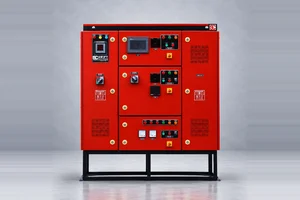
Swiftkon's Fire Pump Control Panels are engineered with a focus on reliability, safety, and efficiency. These panels are customized to meet specific application requirements, ensuring seamless integration with your chosen main and jockey pumps. Each panel undergoes detailed inspection and rigorous electrical performance testing before dispatch, guaranteeing adherence to high standards.
By providing robust and dependable control solutions, Swiftkon Electromech plays a vital role in the overall effectiveness of your fire protection infrastructure. Their commitment to quality ensures that the critical signals for pump activation and pressure monitoring are managed with precision, contributing to the longevity and responsiveness of your fire pump setup.
Frequently Asked Questions
Can a jockey pump replace a main fire pump?
No, a jockey pump cannot replace a main fire pump. A jockey pump is designed to maintain system pressure and compensate for minor leaks, operating at low flow rates. A main fire pump is designed to deliver large volumes of water at high pressure to extinguish fires, operating at much higher flow rates.
What happens if the jockey pump fails?
If the jockey pump fails or is undersized, the main fire pump may start and stop frequently due to minor pressure drops. This frequent cycling can cause premature wear and damage to the main pump, reducing its lifespan and potentially leading to failure during an emergency.
How is the main pump activated?
The main fire pump is typically activated by a significant drop in system pressure that the jockey pump cannot correct. This drop indicates a substantial water demand, such as from an activated sprinkler head or an open fire hydrant, signaling the need for emergency water flow.
Are jockey pumps always required in fire protection systems?
In most engineered fire protection systems, a jockey pump is a standard and recommended component. It helps maintain system integrity, prevents unnecessary wear on the main pump, and ensures the system is always primed and ready for immediate action.
What factors determine the size of a jockey pump?
The size of a jockey pump is determined by the total water volume of the system, the expected rate of leakage, and the desired pressure range to be maintained. It needs to be powerful enough to overcome minor pressure losses but not so powerful that it short-cycles the main pump.
Ensure Your Fire Pump System is Optimized
Understanding the distinct roles of main pumps and jockey pumps is the first step towards a robust fire protection strategy. For reliable control systems that ensure your pumps operate efficiently and safely, consider Swiftkon Electromech Pvt. Ltd. We provide customized electrical control panels designed for the demanding requirements of fire pump applications.
Request a Solution