


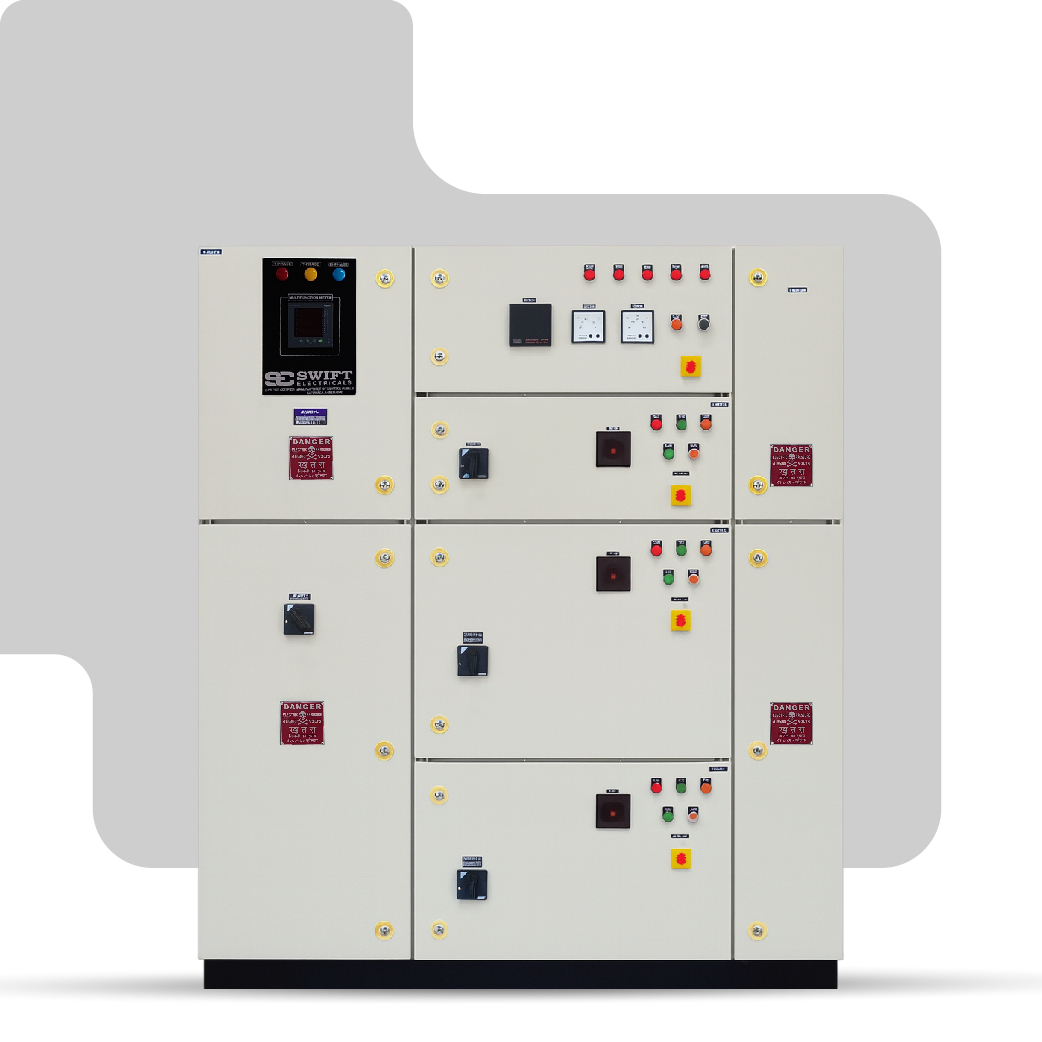
Main LT Panel Manufacturer in India for Reliable Power Distribution
Reliable Main LT Panel Manufacturer in India. Swiftkon Electromech delivers robust power distribution solutions for industrial and commercial needs.
Why This Matters in India
India's rapidly expanding industrial and infrastructure sectors demand robust and reliable electrical systems. From manufacturing hubs in Gujarat to burgeoning IT parks and large-scale infrastructure projects nationwide, the need for efficient power distribution is constant. A stable Main LT Panel ensures that factories can operate without interruption, commercial complexes can maintain essential services, and critical infrastructure like hospitals and data centers remain online. Choosing a manufacturer with a deep understanding of Indian electrical standards and operational demands is crucial for ensuring long-term performance and safety across diverse applications.
What is a Main LT Panel — Overview
A Main LT Panel, or Low Tension Panel, is a sophisticated electrical assembly designed to receive power from a high-tension transformer or a generator and distribute it safely to various outgoing circuits at a lower voltage. It acts as the central hub for power distribution within a facility. These panels house essential components like circuit breakers, busbars, meters, and control devices, all meticulously arranged to manage and protect the electrical supply. Their primary function is to ensure that power is delivered reliably to different sections of a plant or building while providing overcurrent and short-circuit protection.
Key Features and Technical Specifications
When evaluating a Main LT Panel, several key features and specifications are critical for ensuring optimal performance and safety:
Robust enclosure construction using high-quality materials like CRCA or SS for durability.
High-rated busbars capable of handling the total connected load with adequate thermal capacity.
Main incoming circuit breaker with appropriate breaking capacity and protection relays.
Outgoing feeders equipped with individual protective devices (MCBs, MCCBs) for circuit isolation.
Integrated metering for monitoring voltage, current, power factor, and energy consumption.
Phase sequence indicators and phase failure relays for operational safety.
IP (Ingress Protection) rating suitable for the environmental conditions of installation.
Compliance with relevant Indian and international electrical standards.
Industrial Applications and Use Cases
Main LT Panels are indispensable across a wide spectrum of industries, ensuring seamless power distribution for critical operations:
- Manufacturing Plants: Distributing power to various production lines, machinery, and auxiliary equipment.
- Commercial Buildings & Malls: Supplying electricity to lighting, HVAC systems, elevators, and retail outlets.
- Data Centers: Ensuring uninterrupted power for servers, cooling systems, and IT infrastructure.
- Hospitals & Healthcare Facilities: Providing reliable power for medical equipment, lighting, and life support systems.
- Infrastructure Projects: Powering lighting, control systems, and operational equipment in airports, railway stations, and water treatment plants.
- Educational Institutions: Distributing power to laboratories, administrative blocks, and campus facilities.
- Telecommunication Towers: Supplying power to base stations and associated equipment.
- Residential Complexes: Managing power distribution for common areas, lifts, and security systems.
How to Choose the Right Main LT Panel
Selecting the appropriate Main LT Panel requires careful consideration of your specific operational needs and site conditions. Here’s a checklist to guide your decision:
- Load Assessment: Accurately determine the total connected load and peak demand to specify the panel's capacity.
- Component Quality: Verify the quality and brand of critical components like circuit breakers, busbars, and relays.
- Compliance and Certifications: Ensure the panel meets relevant Indian Standards (IS) and international standards (IEC) and carries necessary certifications.
- Environmental Suitability: Select an enclosure with an appropriate IP rating to protect against dust, moisture, and other environmental factors.
- Manufacturer's Experience: Choose a manufacturer with a proven track record in designing and building reliable LT panels.
- Customization Needs: Assess if the panel requires specific customizations for unique operational requirements.
- After-Sales Support: Inquire about warranty, maintenance services, and availability of spare parts.
- Testing and Verification: Confirm that the panel undergoes rigorous factory acceptance testing (FAT) before dispatch.
Quality Standards and Compliance
Adherence to stringent quality standards and regulatory compliance is non-negotiable for Main LT Panels. In India, panels must typically conform to Indian Standards (IS) such as IS 8623 for low-voltage switchgear and controlgear assemblies. International standards like IEC 61439 also provide a robust framework for design and type-testing. Buyers should verify that the manufacturer can provide documentation demonstrating compliance, including type-test reports from accredited laboratories. This ensures the panel is designed and manufactured to withstand expected electrical stresses and environmental conditions, guaranteeing safety and operational integrity.
Why Swiftkon Electromech's Experience and Capability Matters
At Swiftkon Electromech Pvt. Ltd., our extensive experience in electrical panel manufacturing forms the bedrock of our reliable Main LT Panels. We leverage decades of collective expertise, honed through our journey from Swift Electricals to our current integrated brand. Our manufacturing process is meticulously controlled, utilizing advanced machinery and techniques to ensure precision and durability. Our engineering team possesses deep technical knowledge, enabling us to design panels that not only meet but often exceed standard requirements.
We place immense emphasis on quality control at every stage, from material selection to final assembly and testing. This rigorous approach ensures that each Main LT Panel leaving our facility is built for superior performance and longevity. Our capability extends to providing customized solutions, adapting designs to the unique demands of your operations. Furthermore, our commitment to timely delivery and comprehensive after-sales support underscores our dedication to customer satisfaction and building lasting partnerships.
Installation, Maintenance, and Care Tips
Proper installation and regular maintenance are crucial for the long-term performance and safety of your Main LT Panel.
Installation
Ensure installation is carried out by qualified electricians in a clean, dry, and well-ventilated area. The panel should be securely mounted, and all incoming and outgoing connections must be made according to the approved wiring diagrams. Proper grounding is essential for safety.
Routine Maintenance:
Regular inspections should be scheduled, ideally every six months to a year, depending on the operating environment. This includes:
Visual inspection for any signs of overheating, corrosion, or loose connections.
Cleaning the interior of the panel to remove dust and debris, which can cause short circuits or reduce insulation resistance.
Checking the tightness of all electrical connections, including busbars and terminals.
Testing the functionality of circuit breakers and protective relays.
- Verifying the calibration of all meters and indicators.
Care Tips
Avoid operating the panel in excessively humid or dusty environments if it is not designed for such conditions. Ensure that access to the panel is restricted to authorized personnel only. Any modifications or repairs should only be performed by trained professionals.
Frequently Asked Questions
The main function of a Main LT Panel is to receive electrical power from a source, such as a transformer or generator, and distribute it safely and efficiently to various outgoing circuits within a facility at a low voltage. It also provides essential protection against overcurrents and short circuits.
Key components typically include incoming and outgoing circuit breakers (like MCCBs or ACB), busbars for power distribution, protective relays, meters for monitoring electrical parameters (voltage, current, power), fuses, and control wiring.
Safety is ensured through the use of high-quality circuit breakers and protective relays that rapidly disconnect power in case of faults. Proper enclosure design, grounding, and adherence to insulation standards also prevent electrical hazards and protect personnel.
The primary difference lies in the voltage level they handle. LT Panels operate at low voltages (typically below 1000V), while HT (High Tension) Panels operate at higher voltages (above 1000V). Main LT Panels are usually downstream of an HT system or a transformer.
Rigorous testing is performed, including visual inspection, continuity tests, insulation resistance tests, high voltage (HVT) tests, operational tests of breakers and relays, and load tests to ensure the panel performs as per design specifications.
Yes, Main LT Panels are often customized to meet the unique requirements of different industries and applications. This can include specific configurations of outgoing feeders, specialized metering, or unique protection schemes.
Conclusion
For any industrial or commercial entity in India, the Main LT Panel is a critical component for ensuring a stable, safe, and efficient power supply. Selecting a Main LT Panel manufacturer that combines robust engineering, quality components, adherence to standards, and proven experience is vital. Swiftkon Electromech Pvt. Ltd. is dedicated to providing reliable, high-performance Main LT Panels, backed by our commitment to quality and customer satisfaction. We understand the critical nature of power distribution and strive to deliver solutions that empower your operations.
Get In Touch
Swiftkon Electromech Pvt. Ltd.