


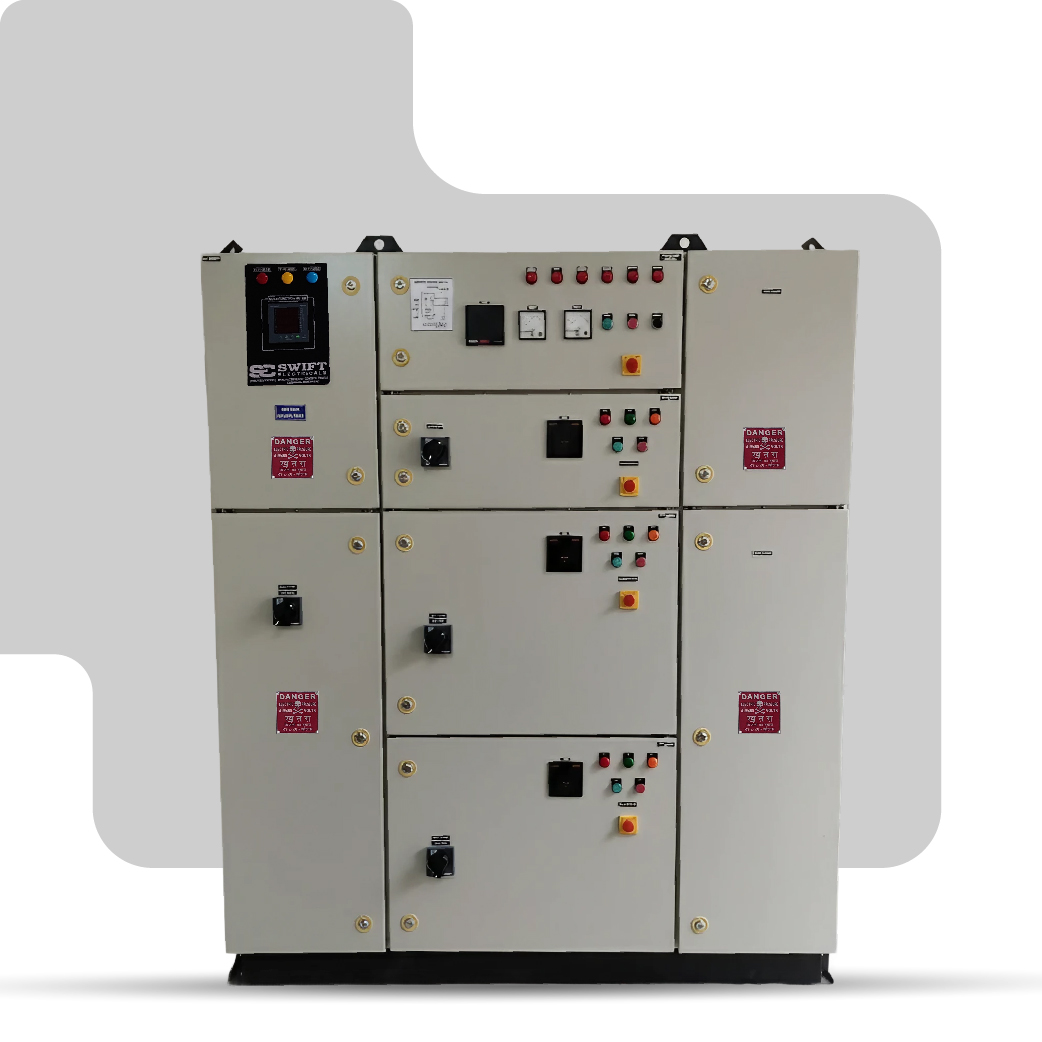
How to Select the Best MCC Panel for Motor Control Applications
Understand how to select the right Motor Control Center (MCC) panel for industrial applications in Ahmedabad. Learn about features, standards, and supplier expe
Why This Matters in Ahmedabad, Gujarat
Ahmedabad and the broader Gujarat region represent a significant industrial and manufacturing powerhouse in India. Sectors such as textiles, pharmaceuticals, chemicals, engineering, and automotive components rely heavily on robust and efficient motor control systems. The continuous operation of machinery in these industries demands reliable electrical infrastructure, making the selection of high-quality MCC panels a strategic investment. Local businesses face unique challenges, including specific environmental conditions and the need for compliance with regional operational standards, which further emphasize the importance of well-engineered and locally supported control solutions.
What is an MCC Panel — Overview
A Motor Control Center (MCC) panel is an assembly of one or more enclosed sections having a common power bus and containing various combinations of motor control units. These units typically include motor starters, variable frequency drives (VFDs), programmable logic controllers (PLCs), and other associated control and protection devices. The primary function of an MCC panel is to centralize the control and power distribution for multiple electric motors from a single location, simplifying operation, maintenance, and troubleshooting. They are designed to provide protection against overloads, short circuits, and other electrical faults, ensuring the longevity of motors and the safety of personnel.
Key Features and Technical Specifications
When evaluating MCC panels, specific features and technical specifications are paramount for ensuring performance and safety. These details define the panel's capability to meet operational demands and integrate seamlessly into existing systems.
- Modular Design: Allows for easy expansion, modification, and maintenance of individual motor control units without disrupting the entire system.
- Busbar Ratings: Specifies the current carrying capacity of the main power distribution system within the panel, crucial for handling peak loads.
- Protection Devices: Includes circuit breakers, motor starters (DOL, Star-Delta), overload relays, and fuses to safeguard motors and wiring.
- Enclosure Type: Defines the level of protection against dust, water, and other environmental factors (e.g., IP ratings like IP54, IP65).
- Control Options: Integration of push buttons, selector switches, indicator lamps, and HMI interfaces for local and remote operation.
- Ventilation and Cooling: Essential for dissipating heat generated by electrical components, especially in high-power applications.
- Cable Management: Provisions for organized routing and termination of power and control cables, enhancing safety and ease of maintenance.
- Safety Interlocks: Mechanisms that prevent unsafe operations, such as opening a compartment while it is energized.
Industrial Applications and Use Cases
MCC panels are versatile and find extensive use across a wide range of industrial sectors dueating to their ability to manage multiple motors efficiently. Their centralized control capabilities are invaluable in complex operational environments.
- Manufacturing Plants: Controlling motors for conveyor belts, assembly lines, pumps, fans, and various processing machinery.
- Water Treatment Facilities: Managing pumps for water intake, filtration, distribution, and wastewater processing.
- HVAC Systems: Operating large motors for industrial air handlers, chillers, and ventilation fans in commercial and industrial buildings.
- Power Generation and Distribution: Controlling auxiliary motors in power plants and substations for cooling, fuel handling, and switchgear operation.
- Chemical and Pharmaceutical Industries: Managing agitators, mixers, pumps, and compressors in process control applications, often requiring explosion-proof enclosures.
- Material Handling Systems: Controlling motors for cranes, hoists, forklifts, and automated storage and retrieval systems in warehouses and logistics centers.
- Textile Mills: Regulating motors for spinning, weaving, dyeing, and finishing machinery, ensuring precise speed and torque control.
How to Choose the Right MCC Panel
Selecting an MCC panel involves a careful assessment of operational needs, technical specifications, and supplier capabilities. A structured approach helps ensure the chosen panel delivers optimal performance and long-term value.
- Assess Motor Load Requirements: Determine the total number, type, and power ratings of all motors to be controlled, including future expansion plans.
- Consider Environmental Conditions: Evaluate the operating environment for factors like dust, moisture, temperature, and corrosive elements to select the appropriate enclosure type (e.g., IP54, IP65).
- Verify Compliance and Certifications: Ensure the panel adheres to relevant national and international electrical safety standards (e.g., IEC, IS, ISO).
- Evaluate Supplier Experience and Reputation: Choose a manufacturer with a proven track record in designing, manufacturing, and supporting MCC panels for similar industrial applications.
- Review Customization Options: Determine if the supplier can tailor the panel design to specific space constraints, control logic, or integration needs.
- Examine After-Sales Support: Confirm the availability of installation assistance, commissioning services, spare parts, and ongoing technical support.
- Consider Safety Features: Prioritize panels with robust safety interlocks, adequate fault protection, and clear labeling for safe operation and maintenance.
- Assess Future Scalability: Look for modular designs that allow for easy addition or modification of motor control units as operational needs evolve.
Quality Standards and Compliance
Adherence to quality standards and regulatory compliance is non-negotiable for MCC panels, directly impacting operational safety, reliability, and lifespan. Buyers must verify that panels meet established benchmarks to ensure they are fit for purpose and legally compliant. Key standards include IEC 61439 (for low-voltage switchgear and control gear assemblies), IS 8623 (for low-voltage switchgear and control gear assemblies in India), and various ISO certifications for quality management systems. These standards cover aspects like design verification, temperature rise limits, short-circuit withstand capability, and protection against electric shock. Verifying these certifications with the manufacturer provides assurance that the panel has undergone rigorous testing and meets stringent performance and safety criteria.
Why Company Experience and Capability Matters
The complexity and critical nature of MCC panels mean that the experience and capability of the manufacturing company are paramount. Swiftkon Electromech Pvt. Ltd. has a history rooted in electrical solutions, evolving from panel retrofitting in 2010 to establishing its own manufacturing facility in 2015. This journey reflects a deep understanding of industrial electrical needs and a commitment to engineering excellence. Our technical team possesses extensive knowledge in designing and assembling panels that meet diverse industrial requirements, from standard DOL starters to intricate MCC and PCC panels.
Our manufacturing process incorporates strict quality control measures at every stage, from component selection to final assembly and testing. This meticulous approach ensures that each panel performs reliably and safely under demanding industrial conditions. Swiftkon Electromech Pvt. Ltd. also emphasizes customization, working closely with clients to develop solutions that precisely fit their operational footprint and control logic. Reliable delivery and comprehensive after-sales support, including installation guidance and maintenance assistance, are integral to our service, ensuring long-term operational efficiency for our clients.
Installation, Maintenance and Care Tips
Proper installation and diligent maintenance are crucial for maximizing the lifespan and ensuring the safe operation of an MCC panel. Following established guidelines can prevent costly downtime and extend the panel's service life.
- Professional Installation: Always engage qualified electricians for installation to ensure correct wiring, grounding, and adherence to all local electrical codes and manufacturer specifications.
- Environmental Control: Ensure the installation location provides adequate ventilation, maintains appropriate temperature and humidity levels, and is free from excessive dust or corrosive elements.
- Regular Inspections: Conduct routine visual inspections for loose connections, signs of overheating, dust accumulation, or damaged components.
- Cleaning: Periodically clean the interior of the panel using appropriate non-conductive tools to remove dust and debris, which can impede cooling and cause tracking.
- Component Checks: Verify the functionality of circuit breakers, contactors, relays, and other protective devices. Test overload relays regularly to ensure they trip at the correct settings.
- Thermal Imaging: Utilize thermal cameras to identify hot spots within the panel, indicating potential loose connections or overloaded circuits before they lead to failure.
- Documentation: Maintain up-to-date wiring diagrams, component lists, and maintenance logs. This documentation is invaluable for troubleshooting and future modifications.
- Preventive Maintenance Schedule: Establish a comprehensive preventive maintenance schedule based on manufacturer recommendations and operational intensity.
FREQUENTLY ASKED QUESTIONS
The primary purpose of a Motor Control Center (MCC) panel is to centralize the control and power distribution for multiple electric motors within an industrial facility. It integrates various motor starters, protection devices, and control components into a single, organized enclosure. This centralization simplifies operation, enhances safety by providing fault protection, and streamlines maintenance procedures for all connected motors, contributing to overall operational efficiency.
MCC panels are broadly categorized by their construction and accessibility. Fixed-type MCCs have permanently mounted components, while draw-out type MCCs allow individual motor control units to be easily removed and replaced without de-energizing the entire panel, offering greater flexibility and reduced downtime. They can also be classified by their enclosure ratings (e.g., IP54, IP65) based on environmental protection, and by the type of motor starters they house (e.g., DOL, Star-Delta, VFD).
The frequency of MCC panel inspections depends on the operating environment, load conditions, and criticality of the motors it controls. Generally, a thorough visual inspection should be performed annually, with more detailed electrical and thermal inspections every 3-5 years. In harsh environments or for critical applications, more frequent inspections, perhaps quarterly or semi-annually, are advisable to detect potential issues early and prevent unexpected failures.
Essential safety features in an MCC panel include robust short-circuit and overload protection through circuit breakers and thermal overload relays. It should also have clear labeling, proper grounding, and safety interlocks that prevent access to live parts or unsafe operations. Emergency stop buttons, arc flash mitigation designs, and adequate ventilation to prevent overheating are also critical for personnel safety and equipment protection.
Yes, MCC panels are highly customizable to meet specific industrial requirements. Customization options include tailoring the number and type of motor control units, integrating specific control logic (e.g., PLCs, HMIs), selecting specialized enclosure materials or IP ratings for harsh environments, and accommodating unique space constraints. A reputable manufacturer can design a panel that precisely matches the operational needs and future expansion plans of a facility.
The typical lifespan of a well-maintained MCC panel can range from 20 to 30 years, or even longer. Factors influencing its longevity include the quality of components used, the operating environment, the effectiveness of preventive maintenance, and the consistency of the electrical load. Regular inspections, timely replacement of worn parts, and adherence to manufacturer guidelines are key to achieving and extending the expected service life.
Conclusion
Selecting the appropriate MCC panel for motor control applications is a strategic decision that underpins the efficiency, safety, and reliability of industrial operations. For businesses in Ahmedabad, Gujarat, understanding the technical specifications, evaluating local industrial demands, and prioritizing compliance with quality standards are crucial steps. Partnering with an experienced manufacturer like Swiftkon Electromech Pvt. Ltd., known for its engineering capability, rigorous quality control, and commitment to tailored solutions, ensures that your investment in an MCC panel delivers sustained performance and operational peace of mind. A well-chosen and properly maintained MCC panel is a cornerstone of a productive and secure industrial environment.
Get In Touch
Swiftkon Electromech Pvt. Ltd.