


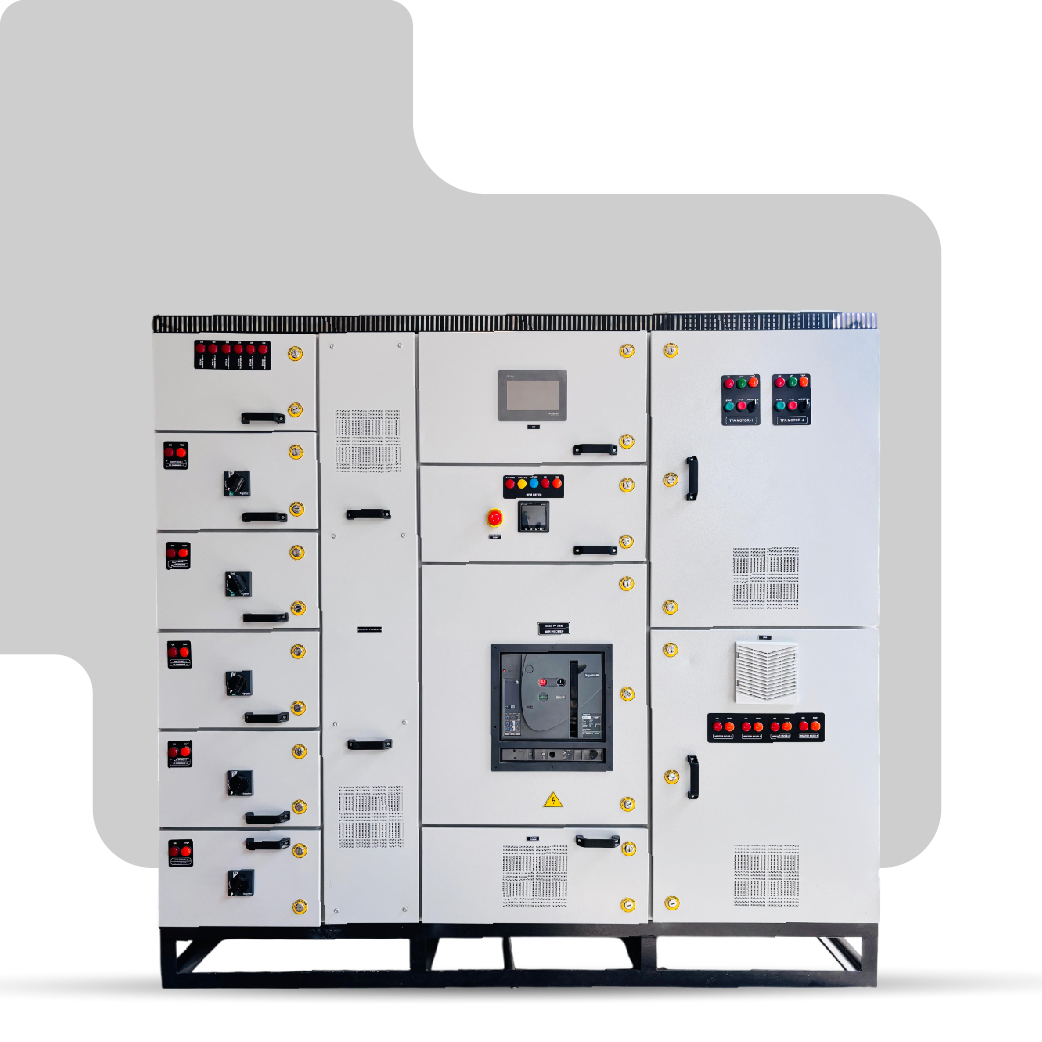
In today's energy-conscious industrial and commercial landscape, optimizing electrical efficiency is not just a matter of sustainability but also a direct path to significant cost savings. A key component in achieving this optimization is the Automatic Power Factor Correction (APFC) panel. These sophisticated electrical systems play a crucial role in enhancing the performance of power distribution networks by actively managing and improving the power factor. Understanding how APFC panels work, their benefits, and how to select the right one can lead to substantial reductions in energy consumption and operational expenses.
Understanding Power Factor and Its Impact
Before delving into APFC panels, it's essential to grasp the concept of power factor. In any AC electrical system, power is broadly categorized into three types:
- Real Power (kW): This is the power that actually performs useful work, such as running motors, lighting, or heating.
- Reactive Power (kVAR): This power is necessary for equipment like motors, transformers, and fluorescent lights to create and maintain magnetic or electric fields. It doesn't perform work but is essential for the operation of inductive loads.
- Apparent Power (kVA): This is the vector sum of real and reactive power. It represents the total power that the electrical system must supply.
The Power Factor (PF) is the ratio of real power (kW) to apparent power (kVA), often expressed as a decimal or percentage (e.g., 0.95 or 95%). An ideal power factor is 1 (or 100%), meaning all supplied power is being used for work. Most industrial and commercial facilities have a significant number of inductive loads (like motors and transformers), which require more reactive power than real power, leading to a lagging power factor (less than 1). A low power factor indicates inefficient use of electricity. Utility companies typically supply apparent power (kVA), and if a facility has a low power factor, it means the utility must generate and transmit more power than is effectively being used, leading to increased costs and potential penalties for the consumer.
💡Buyer Insight: Utilities often impose penalties on industrial and commercial customers whose power factor drops below a certain threshold (e.g., 0.9). Improving your power factor can directly eliminate these charges and reduce your overall electricity bill.
What Are APFC Panels and How Do They Work?
An Automatic Power Factor Correction (APFC) panel is an electrical device specifically engineered to continuously monitor the power factor of an electrical installation and automatically adjust it by switching in or out banks of capacitors. These capacitor banks provide the necessary reactive power (kVAR) to counteract the lagging reactive power demanded by inductive loads.
The operation is typically managed by a sophisticated controller. This controller samples the system's power parameters and compares the actual power factor to a pre-set target (e.g., 0.98 or 0.99 lagging). When the power factor falls below the target due to increased inductive load, the controller detects this and automatically connects one or more capacitor stages. Conversely, if the power factor approaches unity or becomes leading (due to excess capacitive compensation, which can also be detrimental), the controller will disconnect capacitor stages. This dynamic, real-time adjustment ensures the power factor remains within the desired optimal range, minimizing reactive power demand from the utility.
Key components of an APFC panel include:
- APFC Controller: The intelligent brain that monitors and controls the switching operations.
- Capacitor Banks: Groupings of capacitors designed to supply leading reactive power. They are often segmented into different sizes (steps) to allow for fine-tuning.
- Contactors/Thyristors: Electrical switches that connect or disconnect the capacitor banks based on the controller's commands. Thyristors offer faster, noiseless switching, which is beneficial for rapidly fluctuating loads.
- Fuses/Circuit Breakers: For overcurrent protection of the capacitor banks and panel.
- Enclosure: A robust housing to protect the internal components.
Key Benefits of Installing APFC Panels
Implementing APFC panels brings a multitude of advantages to industrial and commercial facilities:
Reduced Energy Costs
By improving the power factor to near unity, APFC panels significantly reduce the amount of apparent power (kVA) drawn from the utility. This directly lowers electricity bills and helps avoid hefty penalties for poor power factor.
Improved System Efficiency
Minimizing reactive power reduces energy losses in transformers, cables, and switchgear. This leads to a more efficient overall electrical system, with less power wasted as heat.
Increased Equipment Lifespan
Reduced electrical stress on components like transformers and motors due to lower current flow can extend their operational life and reduce maintenance requirements.
Enhanced System Capacity
By supplying reactive power locally, APFC panels free up the utility's capacity. This means more active power (kW) can be utilized within the existing infrastructure, potentially delaying or avoiding costly upgrades.
Stable Voltage
APFC panels contribute to better voltage regulation within the facility, ensuring equipment receives a more stable and consistent voltage supply, which is crucial for optimal performance.
Common Applications for APFC Panels
APFC panels are integral to the efficient operation of a wide array of facilities where inductive loads are prevalent:
- Industrial Manufacturing Plants: Factories with numerous motors, pumps, compressors, and heavy machinery.
- Textile Mills: Large numbers of electric motors used in spinning, weaving, and processing.
- Cement and Steel Plants: Require substantial power for crushers, kilns, furnaces, and rolling mills.
- Automotive Manufacturing: Extensive use of automated machinery and robotics.
- Commercial Buildings: Shopping malls, hospitals, and large office complexes with HVAC systems, elevators, and extensive lighting.
- Power Distribution Utilities: For improving the overall power factor of the grid.
- Data Centers: Managing the large power demands of cooling and IT equipment.
Selecting the Right APFC Panel for Your Needs
Choosing the appropriate APFC panel is critical for maximizing its effectiveness and ensuring a good return on investment. Consider the following factors:
Key Selection Criteria
- System Load Characteristics: Analyze the nature and fluctuation of your electrical load. Is it constant, or does it vary significantly? This will influence the type of controller and switching mechanism (thyristor vs. contactor) needed.
- Required Capacity (kVAR): Calculate the total reactive power compensation needed. This is usually determined by your average load and target power factor. A professional electrical audit can help determine this accurately.
- Number of Steps: For fluctuating loads, a panel with more, smaller capacitor steps offers finer control and a more stable power factor.
- Controller Type: Modern controllers offer advanced features like harmonic detection, auto-detuning, and communication capabilities.
- Environmental Conditions: Ensure the panel's enclosure is suitable for the operating environment (e.g., dust, humidity, temperature).
- Safety and Protection: Verify that the panel includes adequate overcurrent protection and safety features.
When evaluating APFC panel suppliers, look for manufacturers with a proven track record and the ability to offer customized solutions. Understanding your facility's specific electrical profile is the first step in making an informed decision.
Swiftkon Electromech: Your Partner for Efficient Power Solutions
Swiftkon Electromech Pvt. Ltd. specializes in designing and manufacturing reliable, safe, and efficient electrical control panels. Among their offerings is the PDB with APFC Panel, designed to help businesses optimize their power factor and reduce energy costs. With a commitment to providing tailor-made solutions for diverse industries like manufacturing, infrastructure, and power distribution, Swiftkon understands the critical role of efficient power management in operational success.
Their expertise in custom-built solutions ensures that facilities can implement APFC technology that precisely meets their unique load requirements. By partnering with Swiftkon, companies can gain access to advanced electrical panel solutions aimed at improving system performance and cutting down on operational expenses. Swiftkon is dedicated to engineering excellence and delivering panels that enhance reliability and efficiency for their clients.
Frequently Asked Questions About APFC Panels
What is the difference between manual and automatic power factor correction?
Manual power factor correction involves fixed capacitor banks that are switched on and off manually, or at set times. This is suitable for stable loads but can lead to over-compensation during light loads or under-compensation during heavy loads. Automatic Power Factor Correction (APFC) panels use a controller to dynamically switch capacitor stages in and out based on real-time load conditions, ensuring optimal power factor correction at all times.
Can APFC panels help with harmonic distortion?
Standard APFC panels are designed to correct power factor by compensating for reactive power. However, high levels of harmonic distortion in the power system can interfere with APFC controller operation and even damage capacitor banks. For systems with significant harmonics, detuned APFC panels or harmonic filters may be required. Some advanced APFC controllers have harmonic detection capabilities.
How do I calculate the required kVAR for an APFC panel?
Calculating the required kVAR typically involves analyzing your facility's peak and average electrical load (kW and kVA) and your current power factor. The goal is to determine the amount of reactive power (kVAR) needed to bring your power factor up to the desired level (e.g., 0.95 to 0.99). This often requires a professional energy audit or consultation with an electrical engineer or panel manufacturer.
What is the lifespan of an APFC panel?
The lifespan of an APFC panel depends on its quality, the operating environment, and the load conditions. High-quality panels with robust components typically last between 10 to 15 years. Proper installation, regular maintenance, and operating within the manufacturer's specifications can significantly extend their service life.
Conclusion: Invest in Efficiency with APFC Technology
Improving power factor through the strategic use of APFC panels is a proven method for reducing operational costs and enhancing the reliability of electrical systems. By minimizing reactive power consumption, businesses can see tangible benefits in the form of lower electricity bills, avoidance of utility penalties, and improved performance of their electrical infrastructure. Investing in a quality APFC panel solution from a trusted manufacturer like Swiftkon Electromech Pvt. Ltd. is a smart step towards greater energy efficiency and long-term cost savings.
Ready to Optimize Your Power Factor?
Swiftkon Electromech Pvt. Ltd. offers expert solutions in electrical control panels, including PDB with APFC Panels. Let us help you reduce energy costs and improve your facility's efficiency.
Explore Swiftkon's Solutions