


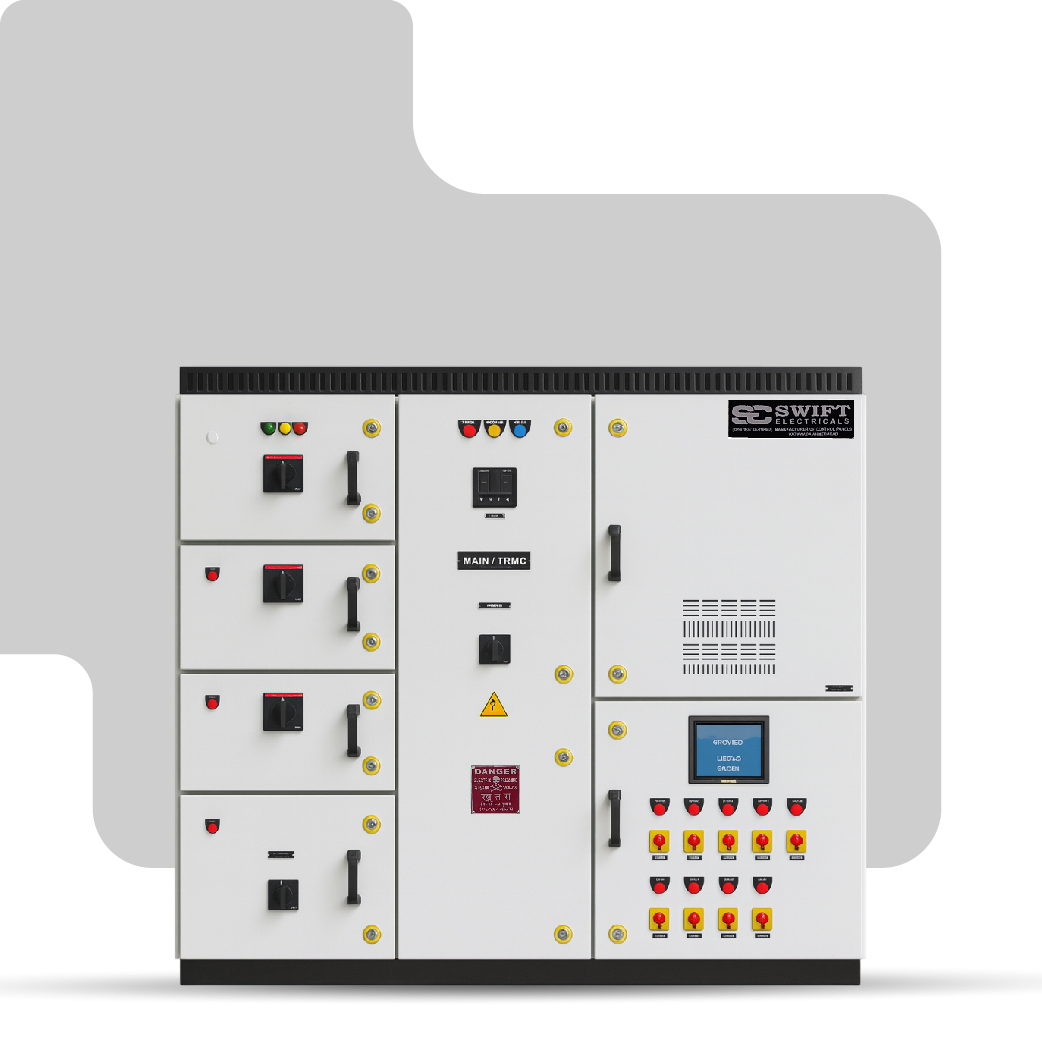
How APFC Panels Help Reduce Electricity Bills in Industries
Discover how APFC panels optimize power factor, significantly reducing electricity bills for industries in Ahmedabad. Learn about their benefits and selection.
Why This Matters in Ahmedabad
Ahmedabad, a prominent industrial and manufacturing hub in Gujarat, is home to a diverse range of industries, from textiles and pharmaceuticals to engineering and automotive components. These sectors rely heavily on electrical machinery, motors, and other inductive loads, which inherently contribute to a lagging power factor. As industrial expansion continues, the demand for stable and cost-effective power supply intensifies. Implementing APFC panels becomes a strategic necessity for businesses here to manage energy costs effectively and comply with utility regulations that often penalize low power factors.
What Is an APFC Panel — Overview
An Automatic Power Factor Correction (APFC) panel is an electrical system designed to improve the power factor of an electrical load. It achieves this by automatically switching ON or OFF banks of capacitors as required, in response to variations in the reactive power demand of the system. This dynamic compensation ensures that the power factor remains close to unity, typically above 0.95, which minimizes reactive power consumption. These panels are critical for facilities with significant inductive loads, such as large motors, transformers, and welding equipment, where reactive power can lead to substantial energy losses and penalties.
Key Features and Technical Specifications
Microprocessor-based APFC relay for precise, real-time power factor control.
Modular capacitor banks allowing for flexible capacity expansion and simplified maintenance.
Heavy-duty contactors specifically designed for frequent capacitor switching applications.
Integrated harmonic filters (optional) to mitigate harmonic distortions in the electrical system.
Comprehensive protection features including overcurrent, overvoltage, and undervoltage safeguards.
Digital display for real-time monitoring of power factor, voltage, current, and KVAR readings.
Robust, industrial-grade enclosure with adequate ventilation for demanding operating environments.
Automatic and manual control modes for operational flexibility.
Industrial Applications and Use Cases
- Manufacturing Plants: Optimizing power factor for heavy machinery like CNC machines, presses, and assembly lines, reducing operational costs.
- Textile Mills: Reducing reactive power consumption from large motors driving looms, spinning machines, and processing equipment.
- Pharmaceutical Facilities: Ensuring stable power supply for sensitive equipment and maintaining energy efficiency in climate control and production systems.
- Plastic Processing Units: Compensating for inductive loads from injection molding machines, extruders, and other heating elements.
- Water Treatment Plants: Improving the efficiency of large pump motors and associated control systems, leading to lower pumping costs.
- Commercial Buildings: Managing power factor for extensive HVAC systems, elevators, and large-scale lighting installations.
- Infrastructure Projects: Enhancing power quality and efficiency in construction sites, data centers, and large public utility installations.
How to Choose the Right APFC Panel
Selecting an appropriate APFC panel requires careful consideration of several technical and operational factors. A thorough assessment ensures the panel effectively meets your facility's specific needs and delivers the expected energy savings.
- Required KVAR Capacity: Accurately assess your facility's reactive power demand to specify the appropriate KVAR rating for the APFC panel. This prevents both under-correction and over-correction.
- Harmonic Distortion Levels: If your facility has significant non-linear loads (e.g., VFDs, rectifiers), consider panels with integrated or provision for harmonic filters to prevent resonance and equipment damage.
- Switching Type: Evaluate whether contactor-switched panels (suitable for stable loads) or thyristor-switched panels (offering faster response for rapidly fluctuating loads) are best for your application.
- Component Quality: Verify the quality and brand reputation of critical components such as capacitors, contactors, and the APFC relay for long-term reliability and performance.
- Enclosure Rating: Ensure the panel's enclosure meets the necessary IP (Ingress Protection) rating for the operating environment to protect against dust, moisture, and other contaminants.
- Supplier Expertise and Support: Choose a manufacturer with proven experience in designing, installing, and commissioning APFC solutions, offering reliable after-sales service and technical assistance.
- Compliance and Certifications: Confirm the panel adheres to relevant national and international electrical safety and performance standards, ensuring operational safety and regulatory compliance.
Quality Standards and Compliance
Adherence to established quality standards is paramount when selecting an APFC panel. Buyers should verify that the panels comply with relevant Indian Standards (IS) such as IS 13340 for shunt capacitors and IS 3231 for relays, as well as international standards like IEC 61921 for power factor correction equipment. ISO 9001 certification for the manufacturer indicates a commitment to quality management systems throughout the design and production process. These certifications ensure that the components used are reliable, the panel operates safely, and its performance meets specified technical parameters, providing confidence in its long-term efficiency and durability.
Why Company Experience and Capability Matters
The effectiveness and longevity of an APFC panel are directly linked to the experience and technical capability of its manufacturer. A company like Swiftkon Electromech Pvt. Ltd. brings a history of designing and manufacturing advanced electrical control panels, including APFC solutions, since 2015. Our team's expertise in understanding diverse industrial requirements allows for the precise engineering of panels that integrate seamlessly into existing systems. We emphasize stringent quality control at every stage, from component selection to final assembly and testing, ensuring each panel delivers superior performance. Swiftkon's capability extends to providing tailor-made solutions, adapting to specific site conditions and operational demands, backed by reliable delivery and comprehensive after-sales support. This commitment to engineering excellence and customer satisfaction builds trust and ensures the installed APFC panel performs as expected, contributing to significant electricity bill reductions.
Installation, Maintenance and Care Tips
Proper installation and regular maintenance are crucial for the optimal performance and extended lifespan of an APFC panel. Installation should always be carried out by qualified electricians, ensuring correct wiring, grounding, and connection to the main power distribution system. Adequate ventilation around the panel is essential to prevent overheating of capacitors and other components, which can degrade their performance and shorten their life.
- Regular Visual Inspections: Periodically check the panel for any signs of physical damage, loose connections, discolored components, or dust accumulation.
- Capacitor Health Check: Routinely test the health of individual capacitor banks and replace any failed or degraded units to maintain the panel's correction efficiency.
- Harmonic Analysis: If your system includes harmonic filters, monitor harmonic levels to ensure they are functioning correctly and prevent potential resonance issues.
- Relay Calibration: Verify the APFC relay settings and calibration to ensure accurate power factor measurement and precise step switching.
- Cleaning: Keep the panel interior and ventilation grilles clean to ensure proper airflow, prevent component degradation, and avoid potential fire hazards.
- Thermal Scanning: Conduct thermal scans using an infrared camera to identify hot spots, which can indicate loose connections, overloaded components, or impending failures.
Frequently Asked Questions
Power factor measures how effectively electrical power is converted into useful work. A low power factor indicates that a significant portion of the supplied electricity is reactive power, which does no useful work but still flows through the system. Industries with low power factors incur penalties from utility providers and experience increased energy losses, making its improvement crucial for cost savings and system efficiency.
The reduction in electricity bills from an APFC panel can often be observed immediately after installation, as the power factor is corrected and reactive power charges are minimized. The exact savings depend on the initial power factor, the utility's tariff structure, and the load profile of the industry. Many businesses see a noticeable impact on their very next billing cycle, making it a quick return on investment.
Yes, APFC panels come in various configurations, primarily differing by their switching mechanism and harmonic mitigation capabilities. Common types include contactor-switched panels, which are suitable for stable loads, and thyristor-switched panels, offering faster response for rapidly fluctuating loads. Some panels also integrate harmonic filters to address power quality issues arising from non-linear loads, providing a more comprehensive solution.
A well-designed and properly maintained APFC panel typically has a lifespan of 10 to 15 years, with capacitors often being the primary components requiring eventual replacement. The longevity depends heavily on the quality of components used, the operating environment, and adherence to recommended maintenance schedules. Regular inspections and timely servicing can significantly extend the panel's operational life and ensure consistent performance.
Absolutely, APFC panels are designed for seamless integration into existing industrial electrical setups. They are connected in parallel to the main power distribution board or at specific load centers within the facility. A thorough site assessment by an electrical expert is necessary to determine the optimal placement and sizing of the panel to ensure maximum effectiveness and avoid any disruption to ongoing operations.
Key indicators that an industry could benefit from an APFC panel include receiving power factor penalty charges on electricity bills, experiencing frequent voltage fluctuations, or noticing excessive heat in transformers and cables. Additionally, if the facility operates a significant number of large motors, welding equipment, or other inductive loads, it is highly likely to have a suboptimal power factor that requires correction.
Conclusion
Optimizing power factor through the implementation of APFC panels represents a tangible strategy for industries to achieve significant reductions in electricity bills and enhance overall operational efficiency. For businesses in Ahmedabad and beyond, understanding the technical aspects, choosing the right capacity, and partnering with an experienced manufacturer are critical steps. By investing in a high-quality APFC solution, industries can ensure a stable power supply, extend the life of their electrical equipment, and contribute to more sustainable and cost-effective operations.
Get In Touch
Swiftkon Electromech Pvt. Ltd.