


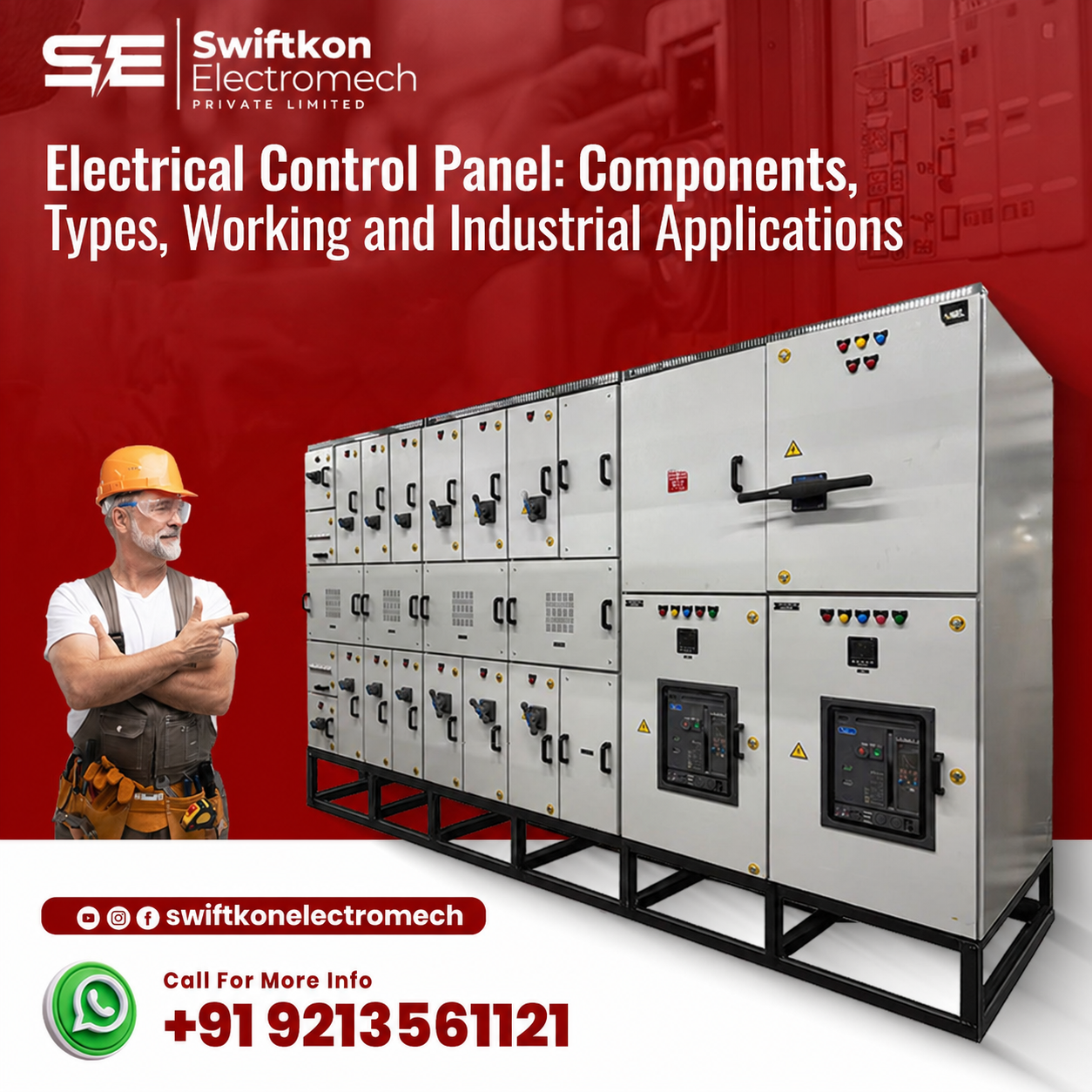
Electrical control panels play a vital role in modern industrial automation by managing, monitoring, and protecting electrical systems used in machines and processes. Whether in manufacturing plants, water treatment systems, HVAC installations, or fire protection networks, these panels help ensure safe power distribution, process control, and reliable operation.
An electrical control panel is an enclosed system containing electrical devices designed to control and regulate equipment. It may include breakers, relays, contactors, PLCs, switches, indicators, overload protection devices, and control wiring arranged in a structured manner.
An electrical control panel is a centralized system used to regulate electrical circuits and control industrial operations. It receives input signals, processes commands, and sends output instructions to connected machines or equipment.
Protect systems from short circuits, overloads and electrical faults.
Control switching operations for motors and electrical loads.
Used for automation logic, sequencing and process control.
Regulates motor speed and supports energy efficiency.
Provide operator control and manual command inputs.
Support monitoring, organized wiring and maintenance.
Used to control multiple motors from a centralized location in industrial production systems.
Designed for main power distribution and load management.
Improves power factor and reduces energy losses.
Used for automation control and machine sequencing.
Supports speed regulation and process efficiency.
Specialized solution designed for fire protection systems.
Supports better process management and consistency.
Helps prevent faults and equipment damage.
Reduces manual intervention and improves productivity.
Supports optimized energy usage.
Allows centralized performance monitoring.
Panels can be designed for specific requirements.
It controls, protects, and manages electrical equipment and industrial processes.
Common components include breakers, relays, PLCs, contactors, meters and VFDs.
MCC controls motors, while PCC manages main power distribution.
Yes, most industrial control panels are designed according to specific application requirements.
Electrical control panels are a critical part of industrial power management and automation systems. From motor control and process safety to energy efficiency and system reliability, they support smooth industrial operations across sectors. Choosing the right engineered solution can significantly improve operational performance.