


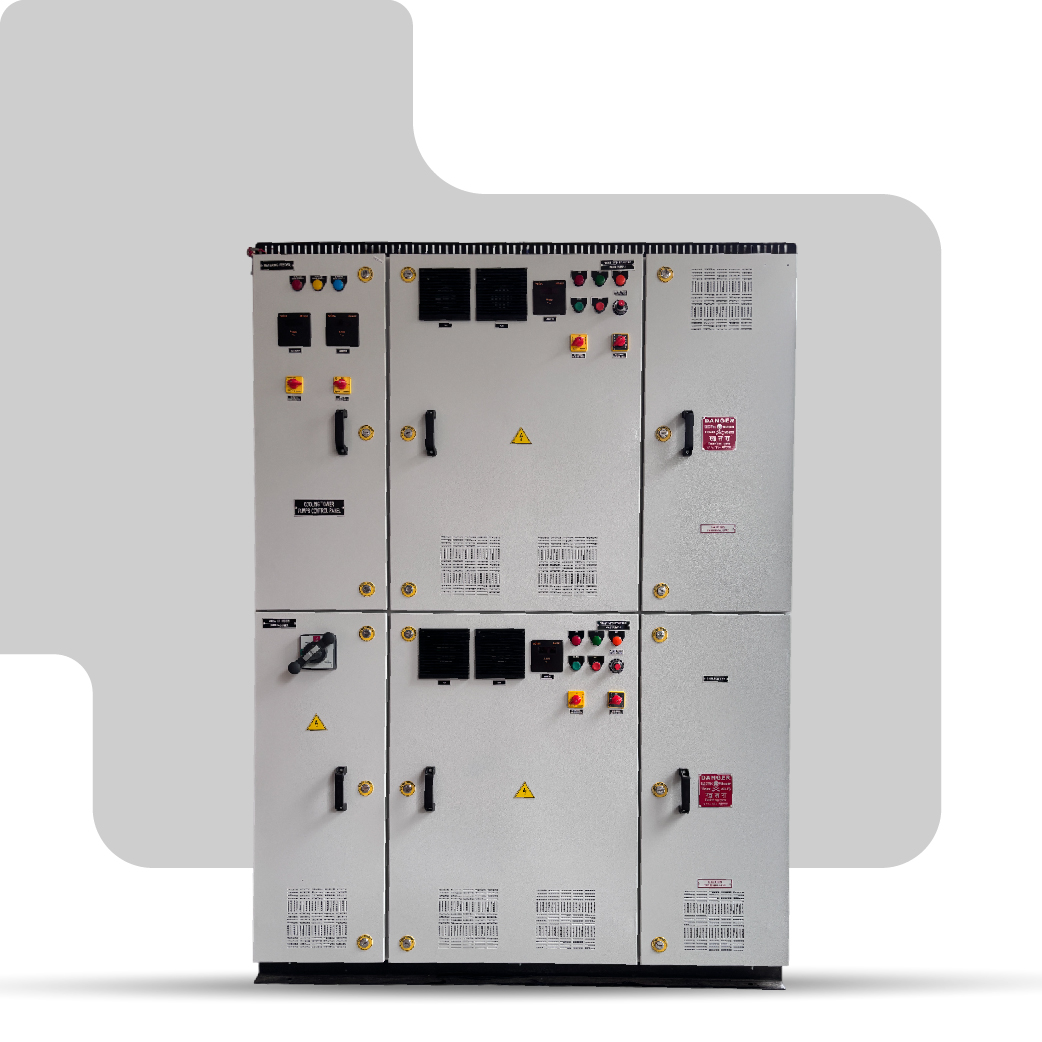
In the realm of industrial automation and motor control, selecting the right electrical panel is paramount for optimal performance, energy efficiency, and equipment longevity. Two common yet distinct solutions are Variable Frequency Drive (VFD) panels and Soft Starter panels. While both are designed to manage electric motors, they operate on fundamentally different principles and serve varied applications. Understanding the precise differences between a VFD panel and a soft starter panel is crucial for engineers, facility managers, and procurement specialists to make informed decisions that align with specific operational needs.
Understanding Motor Control Fundamentals
Electric motors are the workhorses of modern industry, powering everything from conveyor belts and pumps to fans and machinery. However, starting and running these motors efficiently and safely requires sophisticated control systems. Traditionally, motors were started directly across the line, leading to high inrush currents that could stress the electrical grid and mechanical components. This led to the development of technologies like soft starters and VFDs to mitigate these issues and unlock new operational capabilities.
A soft starter primarily focuses on the starting and stopping sequence of a motor. It gradually increases the voltage applied to the motor upon startup, ensuring a smooth acceleration that reduces mechanical shock and electrical stress. Once the motor reaches its operational speed, the soft starter typically bypasses itself, allowing the motor to run at its full, fixed speed. They are ideal for applications where a motor needs to start gently but then run at a constant speed.
A VFD panel, on the other hand, offers far more comprehensive control. It not only manages the startup but can also continuously vary the motor's speed and torque throughout its operation. By precisely adjusting the frequency and voltage supplied to the motor, a VFD allows for dynamic speed adjustments, enabling significant energy savings and precise process control. This makes VFDs suitable for applications requiring variable speed operation, such as in HVAC systems, pump applications with fluctuating demands, or complex manufacturing processes.
Key Distinctions: VFD Panel vs. Soft Starter Panel
The divergence between VFD and soft starter panels lies in their core functionality, complexity, and application scope. While a soft starter is essentially a sophisticated starting device, a VFD is a complete motor speed and torque controller.
| Feature | VFD Panel | Soft Starter Panel |
|---|---|---|
| Primary Function | Variable speed and torque control, smooth start/stop | Smooth start/stop, voltage control during startup |
| Speed Control | Continuous variable speed adjustment (0Hz to full speed) | Fixed speed operation after startup (speed control is not its function) |
| Torque Control | Precise torque control throughout speed range | Limited torque control, primarily for startup management |
| Energy Efficiency | High, especially at reduced speeds | Moderate, primarily during startup phase |
| Complexity | High (Rectifier, DC Bus, Inverter) | Moderate (SCRs, bypass contactor) |
| Cost | Generally higher | Generally lower |
| Size & Heat | Larger, generates more heat | Smaller, runs cooler |
| Internal Architecture | Always active power electronics (rectifier, DC bus, inverter) | Active during start/stop, bypassed during run |
The internal makeup of a VFD includes a rectifier to convert AC to DC, a DC bus for smoothing, and an inverter to convert DC back to variable frequency AC. This complex architecture allows for precise control over motor output. In contrast, a soft starter typically uses Silicon Controlled Rectifiers (SCRs) to regulate voltage during startup, and once the motor is up to speed, these SCRs are bypassed by a contactor, reducing energy loss and heat generation.
Applications and Use Cases
The choice between a VFD panel and a soft starter panel is heavily influenced by the specific demands of the application. Each excels in different scenarios:
VFD Panel Applications
- HVAC Systems: Precise control of fan and pump speeds to maintain optimal temperature and airflow, leading to significant energy savings.
- Pumping Systems: Adjusting pump speed based on demand, ideal for water supply, wastewater treatment, and irrigation where flow rates vary.
- Conveyor Systems: Modulating conveyor speed for synchronization with other processes or for handling different product types.
- Machine Tools: Controlling spindle speeds for precise machining operations and improving surface finish.
- Extruders and Mixers: Varying speed to control material flow, viscosity, and process consistency.
Soft Starter Panel Applications
- Conveyor Systems: Where smooth starting is needed to prevent product spillage or damage, but constant speed is acceptable during operation.
- Pumps and Fans (Fixed Speed): Applications requiring a gentle start to reduce water hammer in pipes or mechanical strain on fan belts, but run at a constant speed.
- Crushers and Grinders: Assisting in overcoming static friction during startup for heavy loads.
- Compressors: Reducing starting torque stress on compressor systems.
- General Machinery: Any application where reducing the initial electrical and mechanical shock during motor start-up is the primary concern.
Key Benefits of Each Solution
Both VFD and soft starter panels offer distinct advantages that contribute to improved industrial operations:
Benefits of VFD Panels
- Energy Savings: Significant power reduction by slowing motor speed to match load requirements.
- Process Optimization: Fine-tuned control over speed and torque for enhanced product quality and consistency.
- Reduced Mechanical Stress: Gentle acceleration and deceleration prolongs motor and equipment life.
- Extended Equipment Lifespan: Less wear and tear due to controlled operation.
- Improved Power Factor: VFDs can often improve the power factor of the motor system.
Benefits of Soft Starter Panels
- Reduced Inrush Current: Protects the electrical supply and other equipment from voltage dips.
- Smoother Starts: Minimizes mechanical shock, reducing wear on belts, gears, and couplings.
- Lower Initial Cost: Typically more economical than VFDs for basic start/stop control.
- Simplicity: Easier to install and configure for straightforward applications.
- Smaller Footprint: Generally more compact than VFD panels.
Buyer's Guide: Selecting the Right Panel
Choosing between a VFD panel and a soft starter panel requires a thorough assessment of your application's needs. Consider these factors:
Key Considerations:
- Speed Control Requirement: Do you need to vary the motor's speed during operation, or is a smooth start/stop at a fixed speed sufficient? If variable speed is needed, a VFD is the only option.
- Energy Efficiency Goals: If significant energy savings are a priority, especially in applications with fluctuating loads, a VFD will offer superior efficiency.
- Process Precision: For applications demanding precise torque or speed for quality control (e.g., manufacturing, machining), a VFD is essential.
- Mechanical Stress Tolerance: Assess the sensitivity of your driven equipment to starting shocks. Both technologies reduce shock, but VFDs offer more control over the entire acceleration ramp.
- Cost Budget: Soft starters are generally more cost-effective for basic applications. VFDs represent a higher initial investment but can yield substantial long-term savings.
- Space and Environment: VFDs can be larger and generate more heat, requiring adequate ventilation.
- Frequency of Starts/Stops: While soft starters are good for fewer, smoother starts, VFDs can handle frequent start/stop cycles with less wear than direct-on-line or even soft-started motors.
Buyer Insight:
Often, the decision hinges on whether continuous speed control is a necessity or a benefit. If your process demands it, a VFD is non-negotiable. If a smooth start is the primary goal and constant speed is acceptable, a soft starter might be the more economical and simpler choice. Always consult with an expert to ensure the panel's specifications precisely match your motor and application requirements.
Swiftkon Electromech: Your Partner in Advanced Motor Control Solutions
At Swiftkon Electromech Pvt. Ltd., we understand the critical role of precise motor control in industrial operations. As a leading designer and manufacturer of electrical control panels, we offer a comprehensive range of solutions, including highly reliable VFD panels and robust Soft Starter panels. Our expertise spans various industries, from manufacturing and infrastructure to power distribution and automation, ensuring we can provide tailored solutions to meet your specific needs.
Whether your application requires the dynamic speed and torque control capabilities of a VFD panel for energy optimization and process precision, or the smooth, stress-reducing startup provided by a soft starter panel, Swiftkon has the engineering capability and product range to deliver. We pride ourselves on designing and manufacturing panels that enhance efficiency, ensure operational reliability, and contribute to the longevity of your valuable equipment. Our commitment is to provide solutions that are not just components, but integral parts of your operational success.
Swiftkon's Panel Offerings Include:
- VFD Panels for variable speed applications
- Panels with Soft Starters for controlled motor acceleration
- Fire Pump Control Panels (available with VFD or Soft Starter options)
- Main LT Panels, PDB Panels, HVAC Chiller Panels, MCC Panels, and more.
Leveraging our experience since our inception as Swift Electricals, and now as Swiftkon Electromech Pvt. Ltd., we continue to innovate and deliver high-quality electrical control solutions across India.
Frequently Asked Questions
Can a soft starter control motor speed?
No, a soft starter's primary function is to control the voltage during motor startup and shutdown to ensure a smooth transition. Once the motor is running, the soft starter typically bypasses itself, and the motor runs at its rated, constant speed. It does not offer variable speed control.
Is a VFD panel more energy-efficient than a soft starter panel?
Yes, a VFD panel is significantly more energy-efficient, especially in applications where motor speed needs to be varied. By adjusting the motor's speed to match the actual load requirement, VFDs can achieve substantial energy savings compared to a soft starter, which only optimizes energy use during the brief startup phase.
Which is more expensive, a VFD panel or a soft starter panel?
Generally, VFD panels are more expensive than soft starter panels due to their more complex internal components and advanced control capabilities. However, the higher initial cost of a VFD can often be offset by long-term energy savings and improved process control.
When should I choose a soft starter over a VFD?
You should consider a soft starter when the main goal is to reduce mechanical stress and electrical inrush current during motor startup, and the motor is intended to run at a constant, full speed thereafter. They are a more economical choice for applications that do not require variable speed operation.
Can VFD panels also provide smooth starting and stopping?
Yes, VFD panels inherently provide very smooth acceleration and deceleration ramps. This smooth start and stop capability is a fundamental feature of VFD technology, in addition to their variable speed control functions.
Empower Your Operations with Swiftkon's Control Solutions
Selecting the correct motor control panel is vital for your operational efficiency, equipment lifespan, and energy consumption. Whether you require the precise variable speed control of a VFD panel or the gentle start-up capabilities of a soft starter panel, Swiftkon Electromech Pvt. Ltd. is equipped to deliver high-quality, reliable solutions.
Contact us today to discuss your specific application needs and let our experts help you find the optimal electrical control panel solution for your business.
