


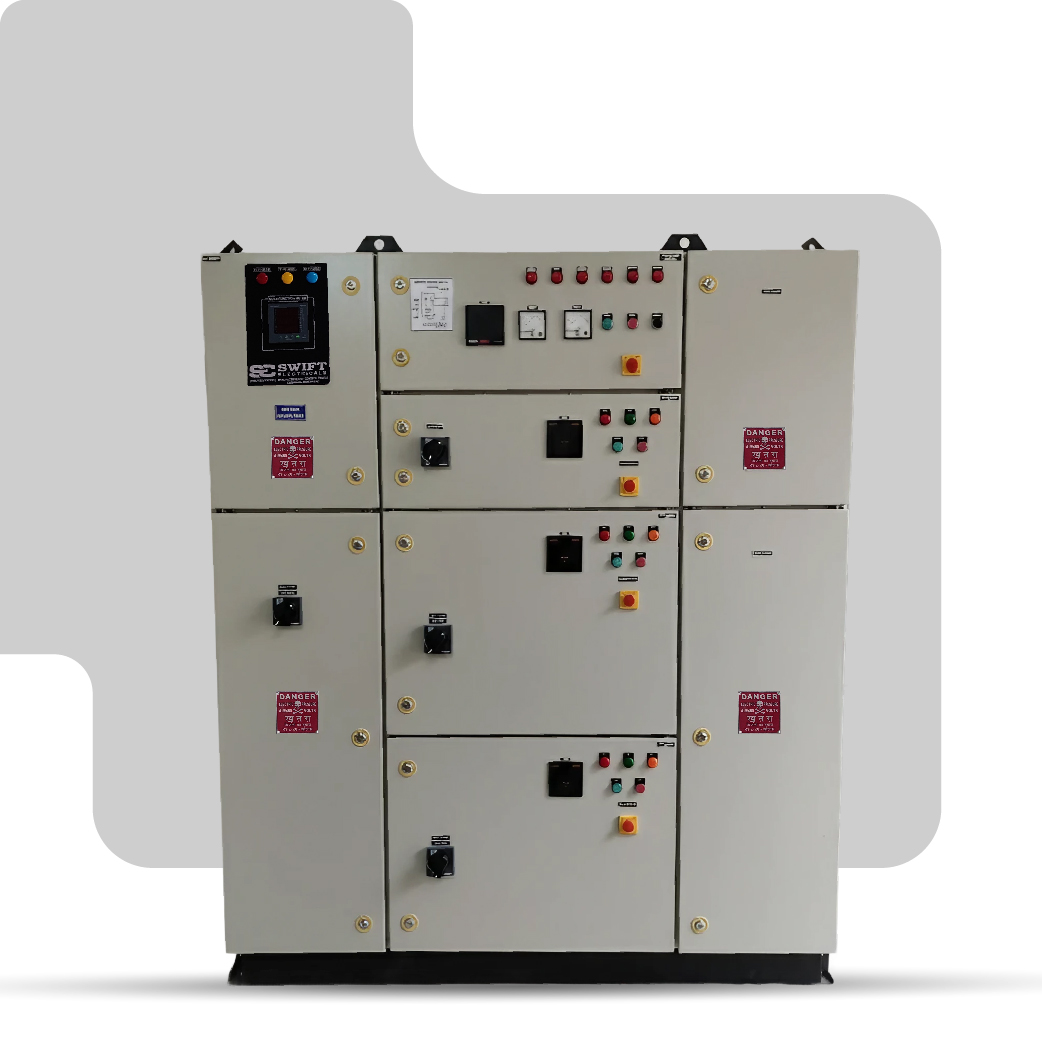
Difference Between MCC Panel and PCC Panel
Learn the key differences between MCC and PCC panels, their applications, and how to choose the right one for your industrial needs in Ahmedabad.
Why This Matters in Ahmedabad
Ahmedabad's vibrant industrial landscape, encompassing textiles, pharmaceuticals, manufacturing, and emerging tech sectors, relies heavily on robust electrical infrastructure. The city's growth and development necessitate reliable power distribution and motor control solutions. Whether you are expanding a manufacturing unit in the Vatva GIDC or setting up a new facility in the Sanand industrial area, the correct choice between an MCC and a PCC panel directly impacts operational efficiency, energy management, and the longevity of your machinery. Understanding these distinctions ensures your electrical systems are optimized for Ahmedabad's specific industrial demands.
What is an MCC Panel — Overview
An MCC panel, or Motor Control Center, is an electrical assembly that houses a group of motor controllers, such as starters, variable frequency drives (VFDs), and circuit breakers, for controlling electric motors. Its primary function is to provide centralized control and protection for multiple motors from a single location. MCCs are designed to manage the starting, stopping, and protection of individual motors, often incorporating features for monitoring motor performance, speed, and current draw. They are essential in applications where numerous motors need to be controlled and protected efficiently.
What is a PCC Panel — Overview
A PCC panel, or Power Control Center, is an electrical panel designed to receive high-voltage power from a primary source, such as a transformer or generator, and distribute it to various downstream electrical loads. Unlike MCC panels, PCC panels are focused on the distribution of power rather than the direct control of individual motors. They contain main incoming circuit breakers, busbars, and outgoing feeders that supply power to different sections of a facility, including other panels like MCCs, lighting circuits, and individual machinery. The primary role of a PCC is to manage and distribute bulk electrical power safely.
Key Features and Technical Specifications
MCC Panel:
Centralized control for multiple electric motors.
Integrated motor starters (DOL, Star-Delta, VFDs).
Individual motor protection (overload relays, circuit breakers).
Often includes instrumentation for motor monitoring (current, voltage, speed).
Modular construction for flexibility and expansion.
Designed for motor loads, typically with lower voltage distribution.
PCC Panel:
Receives and distributes high-power electrical energy.
Main incoming circuit breakers for isolation and protection.
Robust busbar systems to handle large current capacities.
Outgoing feeders for distributing power to various loads.
Focus on power distribution and overall system protection.
Handles higher voltage and current levels compared to individual motor circuits.
Industrial Applications and Use Cases
MCC Panel:
Manufacturing plants for controlling conveyor belts, pumps, fans, and mixers.
Water and wastewater treatment facilities for managing various motor-driven equipment.
Automated production lines requiring precise motor operation.
HVAC systems for controlling large fans and pumps.
Oil and gas industry for controlling pumps and compressors.
PCC Panel:
Substations for distributing power to industrial zones or commercial buildings.
Large manufacturing facilities for receiving main power and distributing it to different departments.
Power generation plants for distributing generated electricity.
Commercial complexes and high-rise buildings for managing power distribution.
Infrastructure projects like airports and railway networks for powering various systems.
How to Choose the Right Panel
Selecting between an MCC and a PCC panel, or understanding how they integrate, requires careful consideration of your facility's electrical needs.
- Power Distribution Needs: Assess the total power requirement and how it needs to be distributed. A PCC handles the main power distribution, while an MCC manages motor-specific power.
- Motor Load Requirements: If your facility primarily involves controlling numerous motors, an MCC is essential. If the focus is on distributing power to various loads, including lighting and general machinery, a PCC is the primary component.
- System Scalability: Consider future expansion. Both panel types should offer options for adding more feeders or motor control units as your operations grow.
- Protection and Safety Standards: Ensure the chosen panel meets relevant national and international safety standards (e.g., IS, IEC) and includes appropriate protective devices.
- Integration with Existing Systems: Determine how the new panel will interface with your current electrical infrastructure. Often, a PCC feeds power to one or more MCCs.
- Supplier Expertise: Partner with a manufacturer like Swiftkon Electromech Pvt. Ltd. that has proven experience in designing and building both types of panels, ensuring compatibility and optimal performance.
Quality Standards and Compliance
For both MCC and PCC panels, adherence to stringent quality standards and compliance with regulatory requirements is non-negotiable. In India, standards like the Bureau of Indian Standards (BIS) and relevant Indian Standards (IS) for electrical equipment are critical. International standards such as IEC (International Electrotechnical Commission) also play a significant role, especially for components and designs intended for global markets. Buyers should verify that the panels are manufactured using high-quality components, undergo rigorous testing, and are accompanied by necessary certifications. This ensures safety, reliability, and compliance with local electrical codes, which is particularly important for industrial operations in Ahmedabad.
Why Swiftkon Electromech Pvt. Ltd. Experience and Capability Matters
At Swiftkon Electromech Pvt. Ltd., our extensive experience in designing and manufacturing a wide range of electrical control panels, including both MCC and PCC configurations, sets us apart. We understand the critical differences and how they integrate within a comprehensive electrical system. Our manufacturing process adheres to strict quality control protocols, ensuring each panel is built for durability and performance. Our team of experienced engineers possesses the technical acumen to design custom solutions tailored to the specific demands of industries in Ahmedabad and beyond.
We focus on using high-quality components and robust construction techniques to guarantee reliability and safety. Our capability extends to providing panels that meet national and international standards, offering our clients peace of mind. Swiftkon Electromech is committed to delivering solutions that not only meet but exceed expectations, backed by a dedication to customer satisfaction and after-sales support.
Installation, Maintenance, and Care Tips
Proper installation and regular maintenance are vital for the longevity and optimal performance of both MCC and PCC panels.
Installation
Ensure the panel is installed in a clean, dry, and well-ventilated area, away from excessive dust, moisture, or corrosive elements.
Verify that the incoming power supply is correctly rated and protected.
All connections should be made by qualified electricians according to the panel's wiring diagram and local electrical codes.
Proper grounding is essential for safety and equipment protection.
Maintenance
- Regular Inspections: Conduct visual inspections for loose connections, signs of overheating, or corrosion.
- Cleaning: Keep the interior of the panel clean. Dust accumulation can lead to short circuits and overheating. Use compressed air for cleaning.
- Tightening Connections: Periodically check and tighten electrical connections, as vibrations can loosen them over time.
- Testing: Regularly test protective devices like circuit breakers and overload relays to ensure they function correctly.
- Component Checks: Inspect components like contactors, relays, and VFDs for wear and tear.
Following these practices will help prevent unexpected failures and ensure your electrical systems operate efficiently.
Frequently Asked Questions
The primary difference lies in their function: a PCC panel is designed for the distribution of high-power electrical energy from a main source to various loads, whereas an MCC panel is specifically for controlling and protecting multiple electric motors, housing their starters and protection devices.
No, a PCC panel is not designed for the specific control and protection requirements of individual motors. While it distributes power, it lacks the integrated motor starters, overload protection, and monitoring features typically found in an MCC.
In many industrial facilities, a PCC panel receives the main power supply and then distributes it to various sub-panels, including one or more MCC panels. The MCC panels then take this power and distribute it to individual motor control circuits.
Safety is paramount. Both panels carry significant electrical current and voltage. Always ensure power is isolated before any inspection or maintenance, use appropriate Personal Protective Equipment (PPE), and ensure work is performed by qualified electricians who understand lockout/tagout procedures.
Yes, in India, MCC and PCC panels should comply with relevant Indian Standards (IS) and Bureau of Indian Standards (BIS) specifications for electrical equipment. Compliance with IEC standards is also common for many components and overall design principles.
Swiftkon Electromech Pvt. Ltd. ensures quality through a rigorous manufacturing process, including the use of high-grade components, strict adherence to design specifications, comprehensive in-house testing procedures, and a commitment to meeting national and international quality standards.
Conclusion
Understanding the distinct roles of Motor Control Centers (MCCs) and Power Control Centers (PCCs) is fundamental for any industrial operation in Ahmedabad seeking efficient, reliable, and safe electrical systems. While PCC panels are the backbone for distributing bulk power, MCC panels are specialized for the precise control and protection of electric motors. Often working in tandem, these panels form a critical part of a facility's electrical infrastructure. Choosing the right configuration, ensuring compliance with standards, and partnering with an experienced manufacturer like Swiftkon Electromech Pvt. Ltd. are key steps to optimizing your operations and ensuring long-term performance.
Get In Touch
Swiftkon Electromech Pvt. Ltd.