


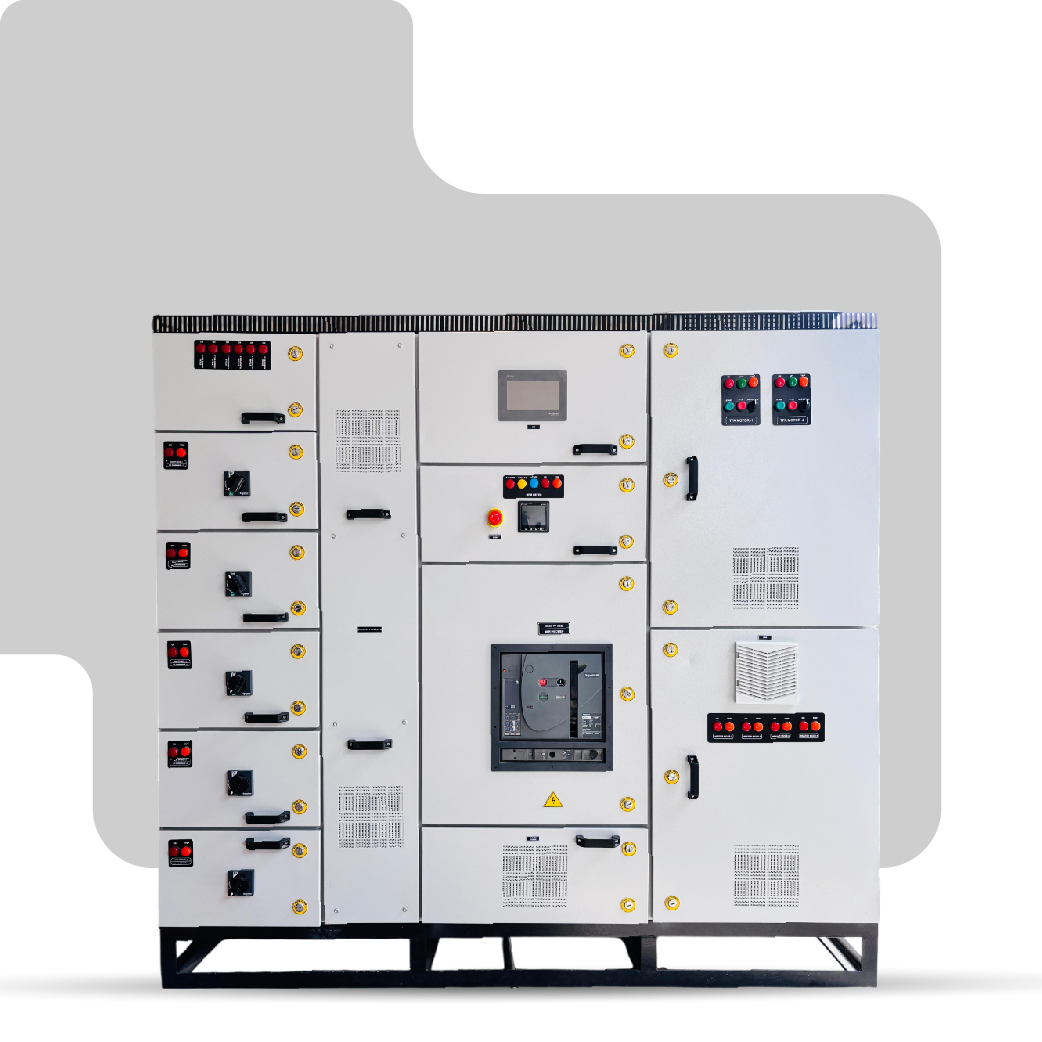
Difference Between APFC Panel and PDB with APFC Panel
Understand the key differences between APFC panels and PDB with APFC panels for efficient power factor correction in Ahmedabad's industrial sector.
Why This Matters in Ahmedabad
Ahmedabad's thriving industrial sector, encompassing textiles, pharmaceuticals, manufacturing, and more, relies heavily on stable and efficient power. High energy costs and the potential for penalties due to poor power factor make optimization a necessity. Industries in Gujarat, including Ahmedabad, are increasingly focused on sustainable practices and reducing their carbon footprint, where efficient power management plays a vital role. Implementing the right power factor correction solutions directly impacts operational budgets and ensures compliance with evolving energy regulations.
What is an APFC Panel — Overview
An Automatic Power Factor Correction (APFC) panel is an intelligent electrical device designed to maintain a desired power factor, typically close to unity (1.0), by automatically switching capacitor banks in or out of the electrical system. It continuously monitors the power factor and employs a controller to detect inductive loads. When the power factor drops below a set threshold, the controller connects capacitor steps to compensate for the reactive power demand, thereby improving the overall power factor.
Key Features and Technical Specifications
- Automatic Control: Utilizes a microprocessor-based controller for precise and responsive power factor management.
- Capacitor Bank Stages: Incorporates multiple capacitor stages for fine-tuned reactive power compensation.
- Adjustable Sensitivity: Allows setting the controller's sensitivity to power factor fluctuations.
- Harmonic Filtering (Optional): Some advanced units include detuning reactors to mitigate harmonic distortion.
- Overload Protection: Built-in protection mechanisms to safeguard the panel and connected equipment.
- Display Indicators: LED or LCD displays for real-time monitoring of power factor, voltage, and current.
- Robust Construction: Enclosures designed for industrial environments, offering durability and protection.
- Modular Design: Facilitates ease of maintenance and future expansion.
Industrial Applications and Use Cases
- Manufacturing Plants: Compensating for inductive loads from motors, transformers, and machinery.
- Textile Mills: Managing power factor issues arising from numerous motor-driven equipment.
- Pharmaceutical Units: Ensuring stable power for sensitive processes and reducing energy bills.
- Data Centers: Optimizing power for cooling systems and IT infrastructure.
- Commercial Buildings: Improving power factor in facilities with significant electrical loads like HVAC systems.
- Automotive Industries: Handling power factor requirements for production lines and heavy machinery.
- Chemical Processing Plants: Maintaining efficient power for pumps, mixers, and other equipment.
- Large Retail Spaces: Reducing demand charges and improving overall electrical efficiency.
How to Choose the Right APFC Panel or PDB with APFC
Selecting the appropriate power factor correction solution requires careful consideration of your facility's specific electrical characteristics and operational needs.
- Load Analysis: Accurately assess your facility's total connected load, peak demand, and typical power factor readings.
- Harmonic Distortion Levels: Measure existing harmonic distortion. If high, consider APFC panels with built-in harmonic filters or a separate harmonic filter system.
- System Voltage and Frequency: Ensure the panel is rated for your specific system voltage and frequency (e.g., 415V, 50Hz in India).
- Required Power Factor Target: Determine the desired power factor (e.g., 0.98 lagging or better).
- Space and Environmental Conditions: Consider the available space for installation and the environmental conditions (temperature, humidity, dust).
- Control Strategy: Decide between a fully automatic APFC panel or a PDB with integrated APFC for combined distribution and correction.
- Manufacturer's Reputation and Support: Choose a reputable manufacturer with a proven track record and strong after-sales service.
- Certifications and Compliance: Verify that the panel meets relevant national and international standards (e.g., IS, IEC).
Quality Standards and Compliance
For any electrical control panel, adherence to stringent quality standards and compliance with regulatory norms is non-negotiable. In India, panels should ideally comply with relevant Bureau of Indian Standards (BIS) specifications and International Electrotechnical Commission (IEC) standards. Manufacturers like Swiftkon Electromech Pvt. Ltd. ensure their products meet these benchmarks, often including certifications like ISO 9001 for quality management systems. Buyers should always verify that the panels are manufactured using high-quality components and undergo rigorous testing before dispatch, ensuring safety, reliability, and longevity.
Why Swiftkon Electromech's Experience and Capability Matters
At Swiftkon Electromech Pvt. Ltd., our extensive experience in designing and manufacturing electrical control panels, including sophisticated APFC and PDB solutions, sets us apart. Our Ahmedabad-based facility is equipped with modern manufacturing technology and staffed by a team of highly skilled engineers and technicians. We meticulously follow a robust quality control process at every stage, from component selection to final assembly and testing. This ensures that each panel we deliver is not just functional but also built for durability and optimal performance in demanding industrial environments.
Our capability extends to understanding the unique power challenges faced by industries in Ahmedabad and across Gujarat. We pride ourselves on offering customized solutions that precisely match client requirements, backed by comprehensive after-sales support and a commitment to customer satisfaction. This dedication to engineering excellence and client-centric service is the foundation of our reputation in the industry.
Installation, Maintenance, and Care Tips
Proper installation and regular maintenance are crucial for the optimal performance and longevity of any APFC panel or PDB with APFC.
Installation
Ensure the panel is installed in a clean, dry, and well-ventilated area, away from excessive heat or corrosive elements.
All electrical connections should be made by qualified electricians according to the wiring diagrams and local electrical codes.
Verify that the incoming power supply voltage and frequency match the panel's specifications.
Proper earthing is essential for safety and the correct functioning of the panel.
Maintenance
- Regular Cleaning: Keep the panel interior clean by periodically removing dust and debris. Use a dry cloth or compressed air.
- Visual Inspection: Regularly inspect all connections for tightness, signs of overheating, or corrosion. Check for any loose wires or damaged components.
- Controller Calibration: Periodically check the APFC controller settings and calibrate it if necessary to ensure accurate power factor monitoring and correction.
- Capacitor Bank Checks: Inspect capacitor units for any signs of leakage, bulging, or damage. Test their capacitance values if possible.
- Fan and Ventilation: Ensure cooling fans (if present) are functioning correctly and ventilation openings are clear.
- Load Monitoring: Keep an eye on the power factor readings and overall load to detect any unusual changes.
Care Tips
Avoid operating the panel beyond its rated capacity.
Protect the panel from sudden voltage fluctuations or power surges.
Follow the manufacturer's recommended maintenance schedule.
Keep a log of all maintenance activities and any issues encountered.
Frequently Asked Questions
An APFC panel's main purpose is to automatically improve the power factor of an electrical system by connecting or disconnecting capacitor banks. This reduces reactive power demand, leading to lower electricity bills and improved system efficiency by bringing the power factor closer to unity.
A Power Distribution Board (PDB) with APFC integrates the functions of power distribution with automatic power factor correction. While a standalone APFC panel solely focuses on power factor correction, a PDB with APFC also distributes electrical power to various loads, with the APFC section actively managing the power factor for the entire system or specific sections.
Improving power factor reduces reactive power, which lowers overall current drawn from the supply. This leads to reduced energy losses in cables, transformers, and other equipment, decreases electricity bills by avoiding penalties, increases system capacity, and improves voltage stability.
While APFC panels are designed to improve power factor, the switching of capacitor banks can sometimes interact with non-linear loads, potentially generating or amplifying harmonic distortion. Advanced APFC panels often include detuning reactors to mitigate this risk.
Regular visual inspections should be performed monthly. A more thorough maintenance check, including cleaning, connection checks, and controller verification, is recommended every six months to a year, depending on the operating environment and load conditions.
Yes, if your facility consistently exhibits a low power factor (typically below 0.9), installing an APFC panel is highly recommended. This will help you avoid penalties from the utility provider, reduce energy consumption, and improve the overall efficiency and stability of your electrical system.
Conclusion
For industrial and commercial entities in Ahmedabad, understanding the distinction between an APFC panel and a PDB with APFC is vital for making informed decisions about power management. While both systems aim to enhance power factor, their integration into your electrical infrastructure and specific operational requirements will dictate the best choice. Swiftkon Electromech Pvt. Ltd. is committed to providing reliable, high-quality electrical control panels that meet the diverse needs of Ahmedabad's industries, ensuring efficient power utilization and operational excellence.
Get In Touch
Swiftkon Electromech Pvt. Ltd.