


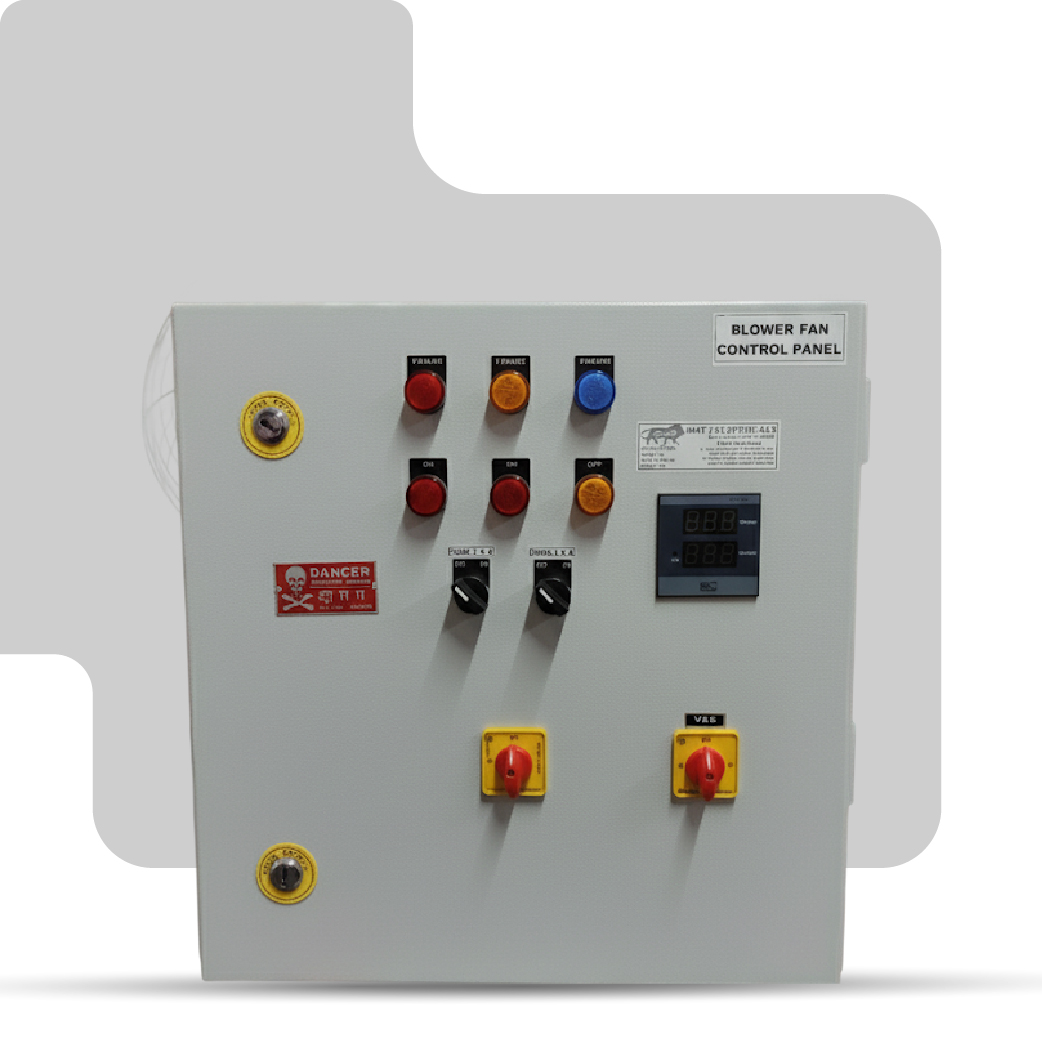
Blower Panel Manufacturer in Ahmedabad for Automation Applications
Expert blower panel manufacturer in Ahmedabad for automation. Swiftkon Electromech delivers reliable, custom control solutions for industrial needs.
What is a Blower Panel? An Overview
A blower panel, also known as a fan control panel or ventilation control panel, is an electrical enclosure designed to house the components that control, monitor, and protect one or more industrial blowers or fans. It acts as the central nervous system for the blower system, receiving input signals and delivering precise power and control commands to the motor. These panels typically include motor starters, overload protection devices, circuit breakers, control relays, and sometimes variable frequency drives (VFDs) for speed control. Their primary function is to ensure blowers operate safely, efficiently, and according to the specific demands of the application.
Key Features and Technical Specifications
When evaluating blower panels for automation applications, several key features and specifications are paramount for ensuring reliable performance and integration.
- Robust Enclosure: Constructed from durable materials like powder-coated mild steel or stainless steel, offering protection against dust, moisture, and physical impact (IP ratings are crucial).
- Motor Starter Options: Includes direct-on-line (DOL) starters for simple applications or star-delta starters for larger motors to reduce inrush current.
- Overload Protection: Integrated thermal or electronic overload relays to prevent motor damage from excessive current draw.
- Circuit Breakers/Fuses: Provide short-circuit protection for the motor and control circuits.
- Control Interface: Terminals for connecting sensors, switches, and PLC (Programmable Logic Controller) signals for automated operation.
- Variable Frequency Drive (VFD) Integration: For precise speed control, energy savings, and soft starting/stopping of the blower motor.
- Indicator Lights and Meters: Visual indicators for power status, fault conditions, and optional meters for voltage, current, or frequency monitoring.
- Customizable Layout: Internal component arrangement designed for optimal wiring, heat dissipation, and ease of maintenance.
Industrial Applications and Use Cases
Blower panels are indispensable across a wide spectrum of industrial operations, particularly where automation plays a key role in process control and efficiency.
- HVAC Systems: Controlling fans in large building ventilation, air conditioning, and heating systems for optimal air circulation and temperature regulation.
- Dust Collection Systems: Managing the powerful fans required to draw airborne particulates from manufacturing processes, ensuring a cleaner and safer work environment.
- Material Handling: Operating fans used in pneumatic conveying systems to move bulk materials like powders, grains, or plastics.
- Industrial Drying: Controlling blowers for ovens or drying tunnels used in food processing, paper manufacturing, or textile production.
- Chemical and Pharmaceutical Processing: Maintaining specific airflow and ventilation rates in clean rooms or process areas where air quality is critical.
- Power Generation: Used in boiler draft fans or cooling systems to ensure efficient operation of power plants.
- Automotive Manufacturing: Controlling ventilation in paint booths or air circulation for assembly line processes.
How to Choose the Right Blower Panel
Selecting the correct blower panel is a critical step in ensuring your automation system performs as expected. Consider these factors:
- Blower Motor Specifications: Match the panel's capacity (amperage, voltage, horsepower) to the specific motor it will control.
- Environmental Conditions: Assess the operating environment (temperature, humidity, dust levels) to determine the required enclosure protection (IP rating) and material.
- Automation Integration Needs: Define how the panel needs to communicate with your existing PLC or control system (e.g., digital inputs/outputs, analog signals, communication protocols).
- Required Control Features: Determine if simple on/off control is sufficient or if variable speed control (VFD), soft start, or specific sequencing is necessary.
- Safety Standards and Certifications: Ensure the panel and its components comply with relevant national and international safety standards (e.g., IS, IEC).
- Supplier's Technical Expertise: Look for a manufacturer with a proven track record in designing and building control panels for similar automation applications.
- After-Sales Support: Inquire about warranty, maintenance services, and availability of spare parts.
- Customization Capabilities: If your application has unique requirements, confirm the manufacturer can provide tailored solutions.
Quality Standards and Compliance
For any industrial control panel, adherence to quality standards and regulatory compliance is non-negotiable. In India, standards like those set by the Bureau of Indian Standards (BIS) are crucial. Manufacturers should be familiar with and adhere to relevant IS (Indian Standards) for electrical installations and control equipment. International standards such as IEC (International Electrotechnical Commission) also provide a framework for robust design and safety.
When selecting a blower panel manufacturer, verify that the components used are of high quality and from reputable brands. The assembly process should follow best practices to ensure secure wiring, proper grounding, and adequate heat dissipation. A manufacturer committed to quality will often have certifications like ISO 9001, demonstrating their dedication to a systematic approach to quality management. This commitment ensures the panel will be reliable, safe, and compliant with industry regulations.
Why Swiftkon Electromech's Experience and Capability Matters
At Swiftkon Electromech Pvt. Ltd., our foundation in electrical panel manufacturing is built on years of practical experience and a deep understanding of industrial automation needs. We don't just assemble panels; we engineer solutions. Our manufacturing process is meticulous, focusing on selecting high-grade components and ensuring precise assembly to meet the demanding requirements of automation applications.
Our technical team possesses the expertise to design panels that integrate seamlessly with complex control systems, offering customized solutions for specific blower applications. We prioritize rigorous quality control at every stage, from design to final testing, ensuring each blower panel delivers the reliability and performance our clients expect. This dedication to engineering excellence and customer satisfaction is what sets Swiftkon Electromech apart as a trusted partner for your automation control needs in Ahmedabad and beyond.
Installation, Maintenance, and Care Tips
Proper installation and regular maintenance are key to maximizing the lifespan and performance of your blower panel.
- Installation: Ensure the panel is installed in a clean, dry, and well-ventilated location, away from excessive heat or corrosive substances. All electrical connections should be made by qualified personnel according to local codes and the panel's wiring diagram. Verify proper grounding for safety.
- Initial Checks: Before powering up, visually inspect all connections and ensure no foreign objects are present inside the enclosure. Test control functions and safety interlocks as per the operational manual.
- Regular Inspections: Periodically (e.g., quarterly or semi-annually, depending on the environment) inspect the panel for dust accumulation, loose connections, or signs of overheating.
- Cleaning: If dust buildup is significant, power down the panel completely and use compressed air to clean components. Avoid using liquids unless specifically recommended and approved.
- Component Checks: Monitor the performance of starters, relays, and VFDs. Listen for unusual noises from the blower motor, which could indicate a control panel issue or a motor problem.
- Preventive Maintenance: Schedule professional servicing to check electrical contacts, tighten connections, and verify protective device settings. This proactive approach can prevent costly downtime.
Frequently Asked Questions
A blower panel acts as the control center for industrial blowers within an automated process. It manages the power supply, provides protection against electrical faults and overloads, and allows for integration with PLCs or other control systems to regulate blower speed, operation cycles, and respond to process demands.
Blower panels incorporate safety features like overload relays, which detect excessive current and shut down the motor before it overheats and sustains damage. They also include circuit breakers or fuses to protect against short circuits, preventing potential electrical fires or equipment failure.
Yes, customization is a key aspect of blower panel manufacturing. Manufacturers can tailor panels with specific components, enclosure types, control logic, and communication interfaces to precisely match the unique requirements of different automation applications and environments.
A DOL (Direct-On-Line) starter connects the motor directly to the power supply, suitable for smaller motors. A Star-Delta starter reduces the initial voltage and current surge during startup for larger motors, providing a smoother start and minimizing stress on the motor and power grid.
The IP (Ingress Protection) rating is critical as it indicates the level of protection the enclosure offers against solid objects (like dust) and liquids (like water). Choosing an appropriate IP rating ensures the panel's internal components are shielded from the specific environmental hazards of its installation location.
Prioritize manufacturers who use components from reputable, established brands known for their reliability and durability. This includes motor starters, relays, circuit breakers, VFDs, and terminal blocks. High-quality components are essential for the long-term performance and safety of the control panel.
Conclusion
For industries in Ahmedabad leveraging automation, a well-designed blower panel is not just a component; it's a critical element for operational efficiency, safety, and reliability. Understanding the specific requirements of your application, from motor specifications to environmental conditions and integration needs, is paramount. Partnering with an experienced manufacturer like Swiftkon Electromech Pvt. Ltd., who understands these nuances and prioritizes quality, compliance, and customization, ensures you receive a control solution built for performance and longevity. Investing in a quality blower panel is an investment in the sustained productivity of your automated processes.
Get In Touch
Swiftkon Electromech Pvt. Ltd.