

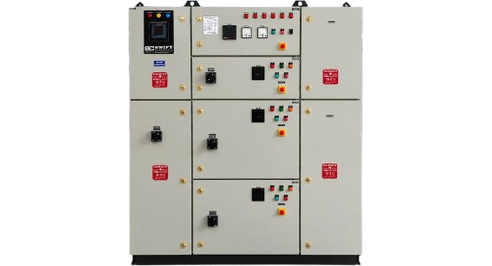

PCC panel working principle
In the complex world of industrial and commercial power management, a Power Control Center (PCC) panel stands as a critical component. It's the central hub responsible for receiving, distributing, and protecting electrical power, ensuring that operations run smoothly and safely. Understanding the PCC panel working principle is fundamental for anyone involved in managing electrical infrastructure, from plant managers to electrical engineers. This guide will demystify how these vital panels function, their key elements, and the benefits they bring to any facility.
Understanding the Role of a PCC Panel
A Power Control Center (PCC) panel is far more than just a metal enclosure with wires; it's a sophisticated electrical system designed to manage high-capacity power. Its primary role is to take power from a main source, such as a transformer or generator, and distribute it effectively to various parts of a facility. This distribution is not just about splitting power; it involves precise control, protection against faults, and monitoring of electrical parameters. Essentially, a PCC panel acts as the brain and guardian of a facility's electrical supply, ensuring reliability and operational continuity.
The need for centralized control and protection becomes paramount as industrial operations grow in complexity and power demands increase. Without a robust system like a PCC panel, managing power distribution would be chaotic, leading to inefficiencies, potential equipment damage, and significant safety hazards. Swiftkon Electromech Pvt Ltd, established in 2010, specializes in designing and manufacturing such critical electrical control panels, with a focus on delivering reliable, safe, and efficient tailor-made solutions for diverse industrial and commercial applications.
Key Components of a PCC Panel
To grasp the PCC panel working principle, it's essential to understand its constituent parts. Each component plays a specific role in the overall function:
- Incoming Circuit Breakers: These are the first line of defense, controlling and protecting the main power supply entering the panel. They can disconnect the power in case of overloads or short circuits.
- Busbars: These are heavy conductive bars that carry the main electrical current from the incoming breaker to the outgoing feeders. They provide a common connection point for distributing power.
- Outgoing Feeders/Circuit Breakers: Each feeder connects the busbar to a specific load or downstream distribution point. Circuit breakers for each feeder provide individual protection and isolation.
- Protection Relays: These intelligent devices monitor electrical parameters like current, voltage, and frequency. They are programmed to detect abnormal conditions (faults) and initiate actions, such as tripping a circuit breaker.
- Control Switches and Indicators: These allow for manual operation of breakers and provide visual feedback on the status of the panel, such as power on/off, breaker status, and fault indicators.
- Metering Instruments: Voltmeters, ammeters, frequency meters, and energy meters are integrated to monitor key electrical parameters, providing insights into power consumption and system health.
- Control and Auxiliary Power Supply: A dedicated system to power the control circuits, relays, and indicators within the panel.
The PCC Panel Working Principle Unveiled
The core of the PCC panel working principle lies in its systematic approach to managing power flow and ensuring protection. It begins when power enters the panel through the main incoming circuit breaker. This breaker is typically rated to handle the total load and provides initial protection.
Once the power is accepted, it flows to the main busbars. These busbars act as a central distribution manifold. From the busbars, power is channelled through individual outgoing feeders. Each feeder is equipped with its own circuit breaker and often a set of protection relays tailored to the specific load it serves. This compartmentalization is key; a fault in one outgoing circuit does not affect the others.
Protection relays continuously monitor the electrical conditions on each feeder and the main busbars. If a relay detects an anomaly – such as a current surge indicative of a short circuit or an extended period of overload – it sends a signal to trip the relevant circuit breaker. This rapid isolation prevents damage to expensive equipment downstream and maintains power to healthy circuits. The meters provide real-time data, allowing operators to monitor system performance and identify potential issues before they escalate.
Swiftkon Electromech Pvt Ltd ensures that their PCC panels are designed with these principles at the forefront, integrating quality components and robust protection schemes to guarantee dependable power distribution and safety.
Applications and Use Cases
PCC panels are indispensable in a wide array of settings where reliable and controlled power distribution is essential. Their versatility allows them to be tailored to specific operational needs:
- Industrial Manufacturing: Powering heavy machinery, production lines, and automated systems in factories.
- Commercial Buildings: Distributing power to different zones, essential services (like HVAC and lighting), and backup systems in large offices, shopping malls, and data centers.
- Power Generation Plants: Managing and distributing power generated from turbines or other sources within the plant.
- Infrastructure Projects: Used in substations for power distribution to grids, or in large-scale construction sites.
- Water Treatment Facilities: Supplying reliable power to pumps, filtration systems, and control equipment.
- Hospitals and Healthcare: Ensuring uninterrupted power for critical medical equipment and life support systems, often integrated with backup generators.
Swiftkon offers a range of panels, including PCC panels, MCC panels, Main LT panels, and more, designed to meet the diverse demands of these applications, emphasizing custom solutions for optimal performance.
Key Benefits of a Well-Designed PCC Panel
Implementing a PCC panel brings significant advantages to any facility's electrical infrastructure:
- Centralized Control: Consolidates power management into a single point, simplifying monitoring and operation.
- Enhanced Safety: Built-in protection devices significantly reduce the risk of electrical accidents, fires, and equipment damage.
- Reliable Power Distribution: Ensures consistent and stable power supply to all connected loads, minimizing downtime.
- Equipment Protection: Safeguards sensitive and expensive machinery from power surges, overloads, and short circuits.
- Operational Efficiency: Optimized power flow and reduced outages contribute to smoother and more productive operations.
- Flexibility and Scalability: Modern PCC panels can be designed to accommodate future expansion, allowing for easy addition of new feeders or increased capacity.
Selecting the Right PCC Panel: A Buyer's Checklist
Choosing the appropriate PCC panel is crucial for long-term performance and safety. Consider these factors:
| Consideration | Key Questions & Factors |
|---|---|
| Power Requirements | What is the total power demand? What are the peak load requirements? What is the voltage and frequency? |
| Type of Load | Are the loads primarily inductive (motors), resistive, or a mix? This affects protection and sizing. |
| Protection Needs | What level of protection is required against overloads, short circuits, earth faults, etc.? Are specific protective relays needed? |
| Environmental Conditions | Will the panel be exposed to dust, moisture, extreme temperatures, or corrosive elements? Specify enclosure type (e.g., IP rating). |
| Space and Accessibility | What are the available dimensions? Is easy access for maintenance and future expansion required? (e.g., draw-out vs. fixed type). |
| Standards and Compliance | Does the panel need to comply with specific industry standards (e.g., IS 8623, IEC 61439)? |
| Manufacturer's Expertise | Does the manufacturer have a proven track record in designing and building reliable PCC panels? Do they offer testing and support? |
When procuring from a specialist like Swiftkon Electromech Pvt Ltd, engaging in clear communication about these requirements ensures you receive a panel precisely engineered for your application.
Swiftkon Electromech: Your Partner in Power Control
Established in 2010, Swiftkon Electromech Pvt Ltd has built a reputation for delivering high-quality, reliable electrical control panels. Their expertise in designing and manufacturing includes robust PCC panels that adhere to stringent quality standards. Each panel undergoes thorough inspection and electrical performance testing before dispatch, ensuring it meets the demands of industrial and commercial applications.
Swiftkon offers tailor-made solutions, meaning they work closely with clients to understand specific power distribution and control needs. From initial design to final commissioning support, their focus remains on safety, efficiency, and reliability. Their product range extends beyond PCC panels to include MCC panels, Main LT panels, APFC panels, and more, showcasing their comprehensive capabilities in electrical control systems.
Buyer Insight
Always ask about the testing procedures and documentation provided with the panel. Comprehensive testing, like that performed by Swiftkon, is a strong indicator of quality and reliability.
Frequently Asked Questions about PCC Panels
What is the main difference between a PCC panel and an MCC panel?
A PCC panel (Power Control Center) is primarily designed for controlling and distributing power to various sections or distribution boards. An MCC panel (Motor Control Center) is specifically designed to control and protect multiple electric motors, housing motor starters, VFDs, and related control circuitry.
How often should a PCC panel be inspected?
Regular inspections are vital. Depending on the operating environment and criticality, inspections can range from quarterly to annually. This includes visual checks, testing of protective devices, and cleaning of components.
Can a PCC panel be customized for specific industrial needs?
Absolutely. PCC panels are highly customizable. Manufacturers like Swiftkon can engineer panels with specific configurations, component selections, and protection schemes to meet unique application requirements.
What are the safety features typically found in a PCC panel?
Key safety features include robust circuit breakers, overload protection relays, short-circuit protection, earthing provisions, phase-failure protection, and often, interlocks to prevent unsafe operations.
What does 'draw-out type' PCC panel mean?
A draw-out type PCC panel features modular compartments where feeder panels can be easily withdrawn for maintenance or replacement without disconnecting the main power supply to other sections. This minimizes downtime.
Ready for Reliable Power Distribution?
Ensure your facility benefits from efficient, safe, and reliable power management. Understanding the PCC panel working principle is the first step towards optimizing your electrical infrastructure.
Swiftkon Electromech Pvt Ltd has the expertise to design, manufacture, and deliver high-quality PCC panels tailored to your specific needs. Contact us today to discuss your project requirements and get a customized solution.
Request a Consultation