

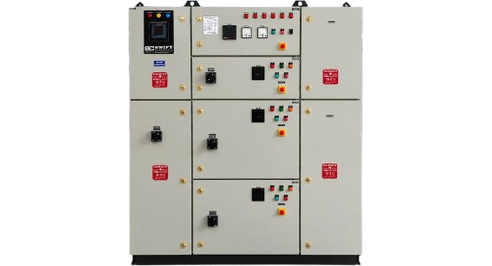
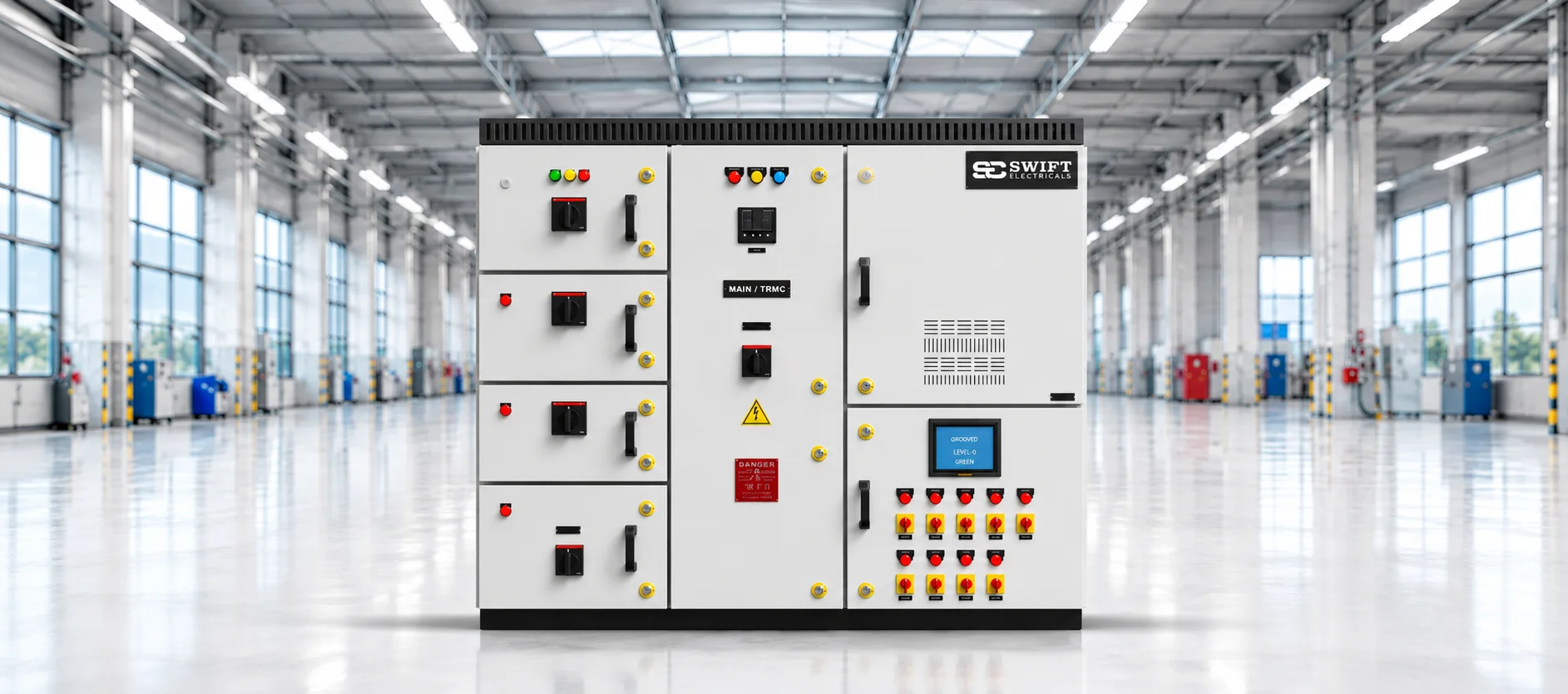
how to calculate APFC panel capacity
Optimizing electrical system efficiency is paramount for businesses seeking to reduce operational costs and ensure reliable power delivery. A key component in achieving this is the Automatic Power Factor Correction (APFC) panel. Understanding how to calculate APFC panel capacity is the first crucial step in selecting and implementing the right solution. This guide will walk you through the process, from understanding power factor to determining the precise kVAR requirements for your APFC panel.
A well-sized APFC panel not only prevents penalties from utility providers due to poor power factor but also enhances overall system performance by reducing energy losses and improving voltage stability. Let's delve into the essential calculations and considerations.
Understanding Power Factor and Its Importance
Before diving into calculations, it's vital to grasp what power factor is and why it matters. Power factor (PF) is a ratio that measures how effectively electrical power is being used by your equipment. It's defined as the ratio of real power (measured in kilowatts, kW) to apparent power (measured in kilovolt-amperes, kVA).
A power factor closer to 1 (or 100%) signifies efficient power utilization, meaning most of the power drawn from the supply is doing useful work. Conversely, a low power factor indicates that a significant portion of the power is being wasted, primarily due to inductive loads like motors, transformers, and certain lighting systems. These loads require magnetizing current (reactive power, measured in kilovar, kVAR) in addition to the actual working current (real power, kW).
The relationship is expressed as: kVA² = kW² + kVAR². A poor power factor results in higher apparent power (kVA) for the same amount of real power (kW), leading to:
- Increased energy bills due to higher apparent power consumption.
- Potential penalties from utility companies for operating below a stipulated power factor threshold (often around 0.9 or 0.95).
- Overloaded electrical infrastructure (cables, transformers), leading to reduced efficiency and potential failures.
- Poor voltage regulation, affecting the performance of sensitive equipment.
APFC panels address this by automatically injecting capacitive reactive power (kVAR) to counteract the inductive reactive power, thereby improving the overall power factor closer to unity.
How to Calculate APFC Panel Capacity: Step-by-Step
Calculating the required capacity for an APFC panel, which is essentially determining the necessary reactive power compensation in kVAR, involves several steps. The goal is to find the amount of capacitive kVAR needed to bring your system's power factor up to a desired level.
Step 1: Determine the Total Load in kVA
You first need to know the total apparent power (kVA) of your electrical installation. This is the vector sum of real power (kW) and reactive power (kVAR). If your load analysis provides only kW and power factor, you can calculate kVA using: kVA = kW / Power Factor.
Step 2: Identify the Existing Power Factor (PF_actual)
This is the current, uncorrected power factor of your system. It can be obtained from utility bills, energy meters, or power quality analyzers. A typical industrial power factor might be around 0.75 to 0.85.
Step 3: Define the Desired Power Factor (PF_desired)
This is the target power factor you aim to achieve, usually dictated by utility regulations or your own efficiency goals. It's commonly set to 0.95 or higher.
Step 4: Calculate the Required Reactive Power (kVAR_required)
This is the core calculation. The required capacitive kVAR is the difference between the existing reactive power and the desired reactive power. The formula is derived from the power triangle:
kVAR_required = kVA * (sin(arccos(PF_actual)) - sin(arccos(PF_desired)))
Alternatively, and often simpler, you can use a multiplying factor based on the existing and desired power factors. You can find tables of these factors, or calculate them. The formula is:
kVAR_required = kW * (tan(arccos(PF_actual)) - tan(arccos(PF_desired)))
Where kW is the real power of the load.
Example Calculation:
Let's assume:
- Total Real Power (kW) = 400 kW
- Existing Power Factor (PF_actual) = 0.80
- Desired Power Factor (PF_desired) = 0.98
First, calculate the total kVA:
kVA = 400 kW / 0.80 = 500 kVA
Now, calculate the required kVAR using the multiplying factor method:
tan(arccos(0.80)) ≈ tan(36.87°) ≈ 0.75
tan(arccos(0.98)) ≈ tan(11.48°) ≈ 0.20
kVAR_required = 400 kW * (0.75 - 0.20) = 400 kW * 0.55 = 220 kVAR
Therefore, you would need an APFC panel with a minimum capacity of 220 kVAR to correct the power factor from 0.80 to 0.98 for a 400 kW load.
Step 5: Consider Capacitor Bank Stages
APFC panels often use multiple stages (banks) of capacitors. This allows the panel to automatically adjust the total compensation based on the varying load conditions, preventing over-correction at lighter loads. The total required kVAR is then divided among these stages.
Step 6: Apply a Safety Margin
It's prudent to add a safety margin of 10-25% to the calculated kVAR to account for future load additions, harmonic currents, and potential inaccuracies in measurements. This ensures the panel remains effective as your needs evolve.
Key Considerations for APFC Panel Sizing and Selection
Beyond the basic kVAR calculation, several other factors are crucial for selecting the right APFC panel and its components:
Harmonics
The presence of non-linear loads (like VFDs, switch-mode power supplies) can generate harmonic currents, which can overheat capacitors and cause resonance. Detuned reactors are often incorporated into APFC panels to mitigate this risk.
Voltage Variation
Significant voltage fluctuations can impact the performance and lifespan of capacitor banks. The APFC panel should be designed to operate reliably within the expected voltage range.
Short-Circuit Levels
The protective devices (MCCBs, fuses) within the APFC panel must be rated to safely interrupt the maximum possible short-circuit current at the installation point.
Switching Frequency
The number of stages and the size of each stage in the APFC panel influence how quickly it can respond to load changes. For rapidly fluctuating loads, a panel with more, smaller stages might be necessary.
Environmental Factors
Consider the ambient temperature, humidity, and dust levels at the installation site. These factors can affect component selection and require appropriate enclosure ratings (IP ratings).
Equipment Sizing for APFC Panels
When sizing components within the APFC panel, such as main incomer MCCBs, individual capacitor bank contactors, and internal cabling, it's essential to:
- Refer to Manufacturer Recommendations: Capacitor and reactor manufacturers provide detailed guidelines for selecting appropriately rated components.
- Incorporate Safety Margins: Always oversize components slightly (e.g., 25% for contactors) to handle continuous operation, potential overloads, and inrush currents.
- Consider Harmonic Mitigation: If harmonics are a concern, use detuned reactors and select components that are specifically designed or derated for such environments.
- Adhere to Standards: Ensure all selected components comply with relevant national and international electrical standards.
Selecting the Right APFC Panel Solution
Choosing the correct APFC panel capacity is critical for maximizing efficiency and avoiding costly penalties. When looking for a reliable solution, consider a manufacturer with a proven track record in designing and building robust electrical control panels.
Buyer Insight: The Cost of Inaccurate Sizing
An undersized APFC panel will fail to achieve the desired power factor, leading to continued penalties and inefficient operation. Conversely, an oversized panel, especially one without adequate staging or detuning for harmonics, can lead to over-correction, voltage rise issues, and premature component failure. Accurate calculation and expert consultation are key.
Why Choose Swiftkon for Your APFC Panel Needs?
Swiftkon Electromech Pvt. Ltd. specializes in designing and manufacturing high-quality electrical control panels, including advanced APFC panels engineered for reliability, safety, and efficiency. Our comprehensive manufacturing process covers everything from meticulous estimation and design to production, rigorous testing, and dedicated after-sales support.
We understand the complexities of power factor correction and offer solutions tailored to your specific industrial requirements. Our commitment to quality is backed by certifications such as CPRI, FSAI, MSME, and ZED, ensuring that you receive robust and compliant electrical control panel solutions for power distribution and automation.
When you partner with Swiftkon, you gain access to expertly engineered panels, including our PDB with APFC Panel configurations, designed to optimize your electrical system's performance and reduce operational costs.
Frequently Asked Questions about APFC Panel Capacity
What is the primary goal of an APFC panel?
The primary goal of an APFC panel is to automatically improve the power factor of an electrical system by compensating for lagging reactive power, typically caused by inductive loads, thereby bringing the power factor closer to unity.
How often should APFC panel capacity be recalculated?
The capacity should be reviewed whenever there are significant changes in the electrical load, such as adding new machinery, increasing production capacity, or upgrading existing equipment. Regular energy audits can help identify the need for recalculation.
Can a low power factor harm my equipment?
Yes, a consistently low power factor can lead to increased current flow, resulting in overheating of cables and transformers, reduced system efficiency, and potential voltage drops that can affect the performance and lifespan of connected equipment.
What happens if the APFC panel capacity is too large?
If the APFC panel capacity is too large or not properly staged, it can lead to over-correction, causing the power factor to become leading. This can result in voltage surges, overheating of capacitors, and potential damage to sensitive electronic equipment.
Do I need an APFC panel if my utility bill doesn't show a power factor penalty?
Even without a direct penalty, operating with a low power factor means you are drawing more apparent power (kVA) than necessary for the real work being done (kW). This leads to higher energy losses in your internal wiring and can still indicate an inefficient system that could benefit from correction.
Ready to Optimize Your Power Factor?
Accurate calculation of APFC panel capacity is essential for efficient operations. Swiftkon Electromech Pvt. Ltd. offers reliable and customized APFC panel solutions designed to meet your specific industrial needs. Contact us today to discuss your requirements and get a quote for a high-performance APFC panel.
Request a Consultation